Vienna 2026: A Practical Guide for Those Who Value Their Time and Money
Planning your route to Vienna and wondering what to visit for a truly rewarding experience? The real Vienna is far more interesting than glossy postcards suggest — it is a living, multilayered city that reveals itself only to those willing to look a little beyond the standard tourist routes. In Austria’s capital during the warm season of 2026, it is absolutely possible to find a perfect balance between monumental imperial heritage and modern green spaces without emptying your bank account.
Optimizing your budget begins long before your first step on Vienna’s cobblestones. Complicated logistics with air travel? Today, that is more like a lottery involving flight delays, expensive transfers from Schwechat Airport, and hidden baggage fees. A much more efficient option is to choose a comfortable direct bus route from Lviv to Vienna offered by KLR Bus. The plan is simple: in the evening, you settle into an ergonomic seat, sleep спокойно through the night, and in the morning step out directly in the central part of a European capital. Less unnecessary stress, more money saved.
So that your holiday in Vienna does not turn into chaotic time-wasting in classic tourist traps, we have developed a clear action plan. Below, we will take a close look at the places in Vienna worth visiting, analyze pricing, and show you how to squeeze the absolute maximum expert value out of every location.
Movement Strategy and the Geographic Logic of the Route
A quality stay in Vienna requires a clearly planned route. The most rational strategy is to start from the historical epicenter — the Inner City (Innere Stadt). This is where the most famous landmarks of Vienna are concentrated, forming a pedestrian-friendly cultural cluster. Once you have explored this central area and understood in practice what Vienna is famous for, it makes sense to move on to sites along the monumental Ring Boulevard. Only after the city’s core symbols have been properly explored should you use transport to reach the large, more distant palace residences.
To keep your trip from turning into an exhausting marathon, and to make the question “Where should I go in Vienna today?” easy to answer, follow these expert time-management recommendations:
- Wear only proven footwear with a high level of cushioning, because the hard historic cobblestones place enormous strain on your feet while you explore Vienna’s remarkable places on foot.
- Book tickets to the most popular palace complexes only through official websites. This will help you quickly decide what to visit in Vienna among the popular seasonal attractions and will completely eliminate hours-long ticket-office queues.
- Install the official municipal transport app on your smartphone. It is your key digital tool, helping you instantly decide where to go next in Vienna and map out the fastest route.
Following these practical recommendations guarantees that you will preserve your energy throughout a full sightseeing day. As a result, you will be able to explore Vienna’s most interesting places comfortably and without rushing, minimize emotional fatigue, and avoid unexpected spending on expensive taxis. With such an official and structured approach, the places in Vienna worth visiting will fit into your schedule with maximum efficiency.
St. Stephen’s Cathedral (Stephansdom)
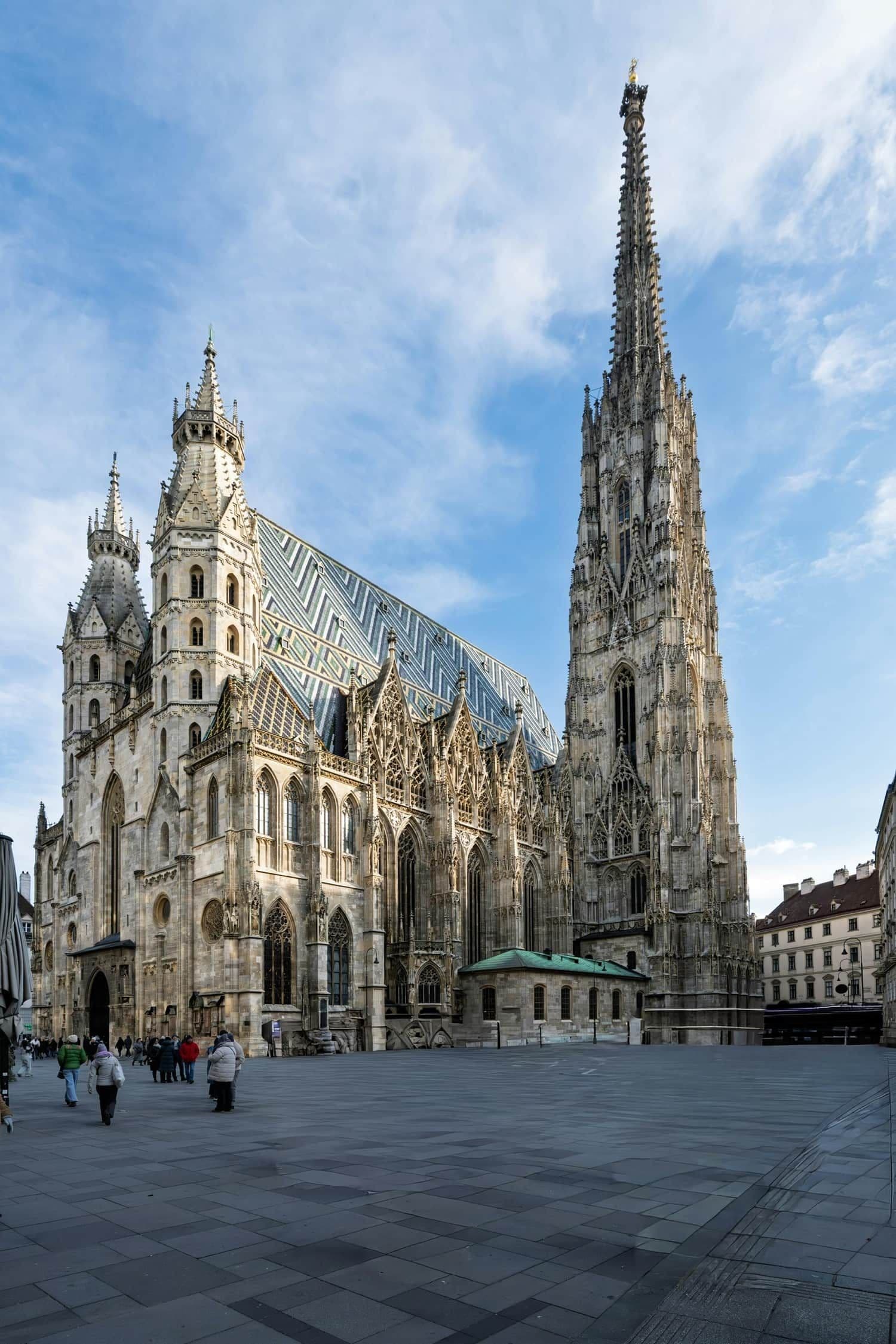
When considering Vienna’s landmarks, this monumental Gothic cathedral deserves your attention first. It is, without question, the city’s architectural dominant and main point of reference. Vienna’s main street, Kärntner Straße, logically leads straight into its walls, forming the central pedestrian hub. The transport logistics here are flawless: metro lines U1 and U3 bring passengers to Stephansplatz station directly in front of the main façade. Entry to the spacious central nave is completely free for all visitors. However, if you are looking for the best observation deck in Vienna, pay attention to the South Tower.
Practical aspects of the visit: cost, timing, and spending optimization
The cost of climbing the South Tower of St. Stephen’s Cathedral is about 6 euros, and although you will have to climb 343 steps on foot, the absence of protective glass at the top guarantees ideal photography conditions if you want memorable photos at Vienna’s iconic sights. The optimal time to visit is 8:00 a.m., because between 11:00 a.m. and 3:00 p.m. the interior experiences the heaviest concentration of tourist groups. Set aside about 1.5 hours for a full visit.
A serious financial mistake is buying an expensive audio guide at the entrance, as it often overloads the listener with excessive historical dates. To optimize food spending, it is recommended to walk 5 minutes to the Bitzinger kiosk near the Albertina Gallery to buy a quality cheese sausage for 7 euros, instead of overpaying at restaurants on the square.
MuseumsQuartier (MQ)

This innovative cultural space, created through the revitalization of former imperial stables, clearly demonstrates modern Vienna for tourists seeking something beyond the classic clichés. The easiest way to get here is by metro line U2 (Museumsquartier station) or U3 (Volkstheater station). Access to the spacious open courtyard with Enzi designer furniture is completely free.
If you are carefully considering which museums in Vienna to include in your cultural program, pay attention to the Museum of Modern Art (MUMOK), where admission costs approximately 15 euros. Overall, this is an ideal open-air Vienna museum space for an evening break. The most comfortable time to come is in the second half of the day, and you should allow 2 to 4 hours for your visit. For a full meal, the classic Glacis Beisl restaurant, tucked away in a cozy corner of the complex, is an excellent choice, where a portion of authentic schnitzel costs around 22 euros.
Schönbrunn Palace and Park Complex (Schönbrunn)
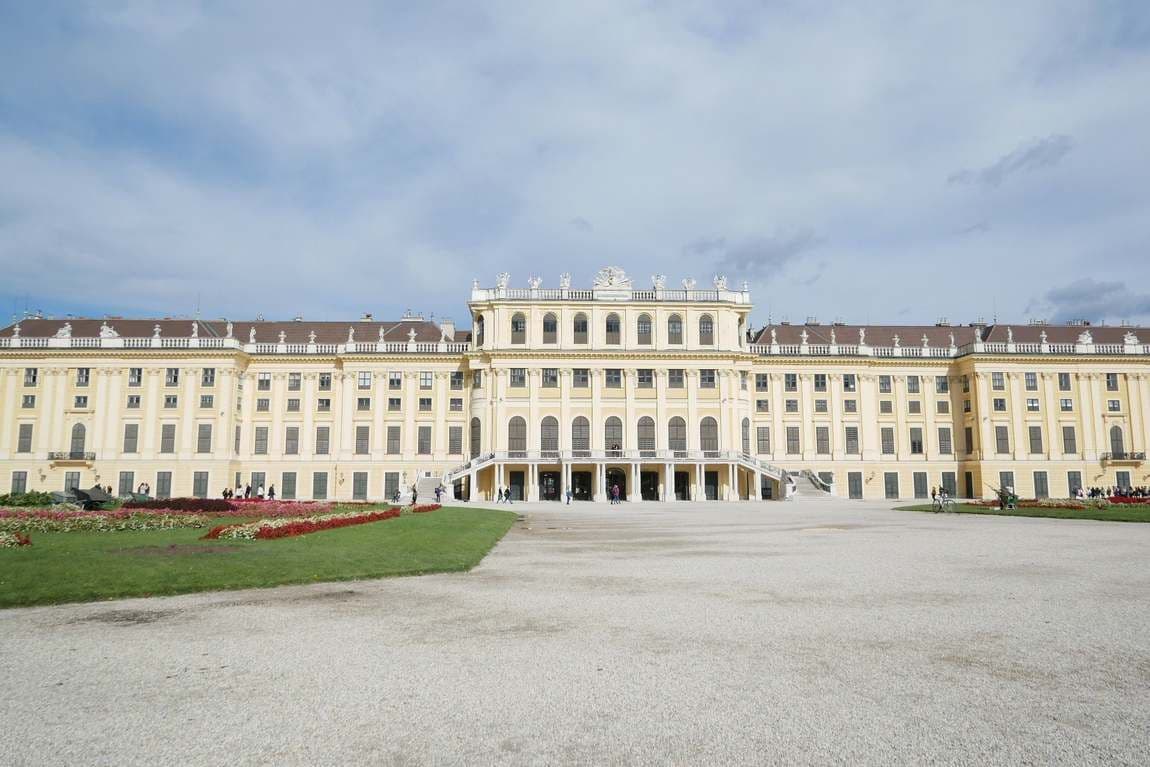
This former summer residence of the powerful Habsburg dynasty consistently tops professional guides’ lists when tourists decide what to see first in Vienna. Logistically, the most convenient option is the green U4 metro line to Schönbrunn station, which takes about 20 minutes from the city center. For travelers who choose the comfortable Chernivtsi–Vienna bus and arrive in the morning, visiting this residence becomes a perfect start to an active city break.
Pay attention to the pricing: the official Schönbrunn ticket for direct access to the imperial rooms costs from 24 to 30 euros. However, access to the vast landscaped park and the hill with the Gloriette is provided by the municipality completely free of charge. The park opens at 6:30 a.m., and the morning hours before 10:00 a.m. are the best for a peaceful walk, since peak crowds last until 2:00 p.m. Plan to spend at least 3 hours here. Food within the palace grounds comes with a high tourist markup, so it is more reasonable to have lunch at the nearby Meidlinger Markt.
Belvedere Complex (Belvedere)
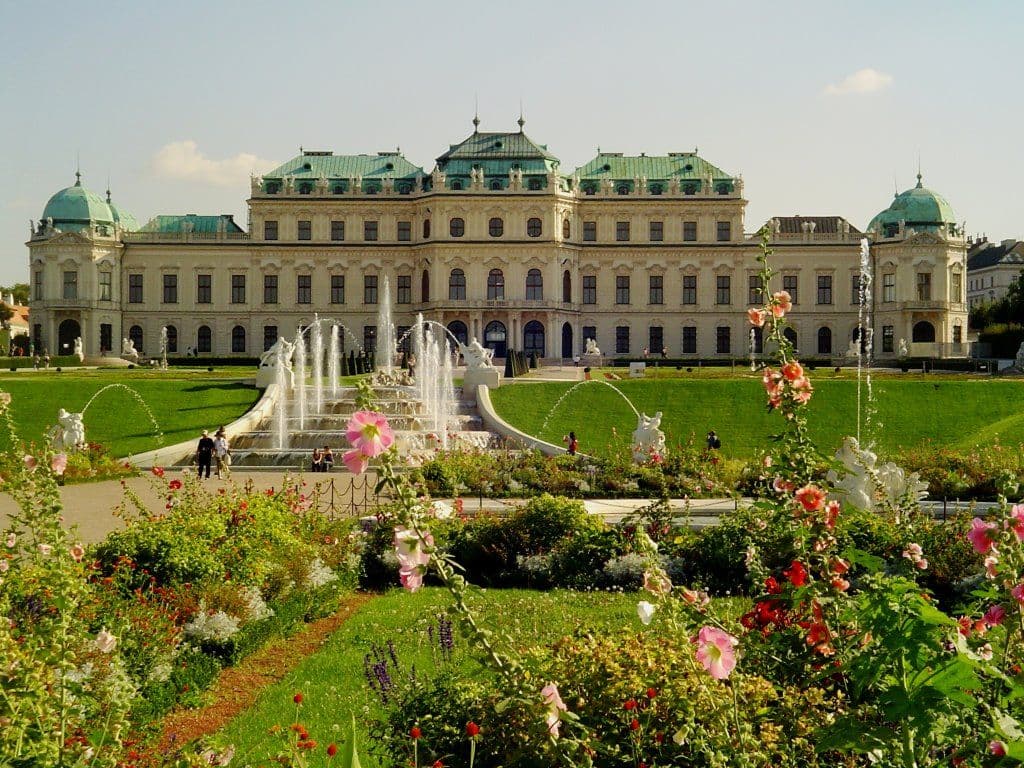
When exploring Vienna’s landmarks, it is impossible to ignore this Baroque masterpiece built for Prince Eugene of Savoy. The optimal route is by tram line D (Schloss Belvedere stop), which brings visitors directly to the Upper Palace. A walk through the well-kept terraced gardens is free. However, the Belvedere ticket to the main gallery, where Klimt’s original The Kiss is displayed, costs about 17–19 euros.
The galleries open at 10:00 a.m., and arriving at that time guarantees a comfortable visit without excessive queues. You should allow around 2 hours for the entire complex. It is better not to start with the Lower Palace, which forces visitors to climb uphill; the correct approach is to begin at the Upper Belvedere and gradually descend. It is also worth knowing that Vienna’s Botanical Garden is located nearby, and admission there is free. Near the lower exit of the complex is the popular local brewery Salm Bräu, where a large portion of roasted pork ribs costs 22 euros.
Hofburg Palace (Hofburg) and Burggarten
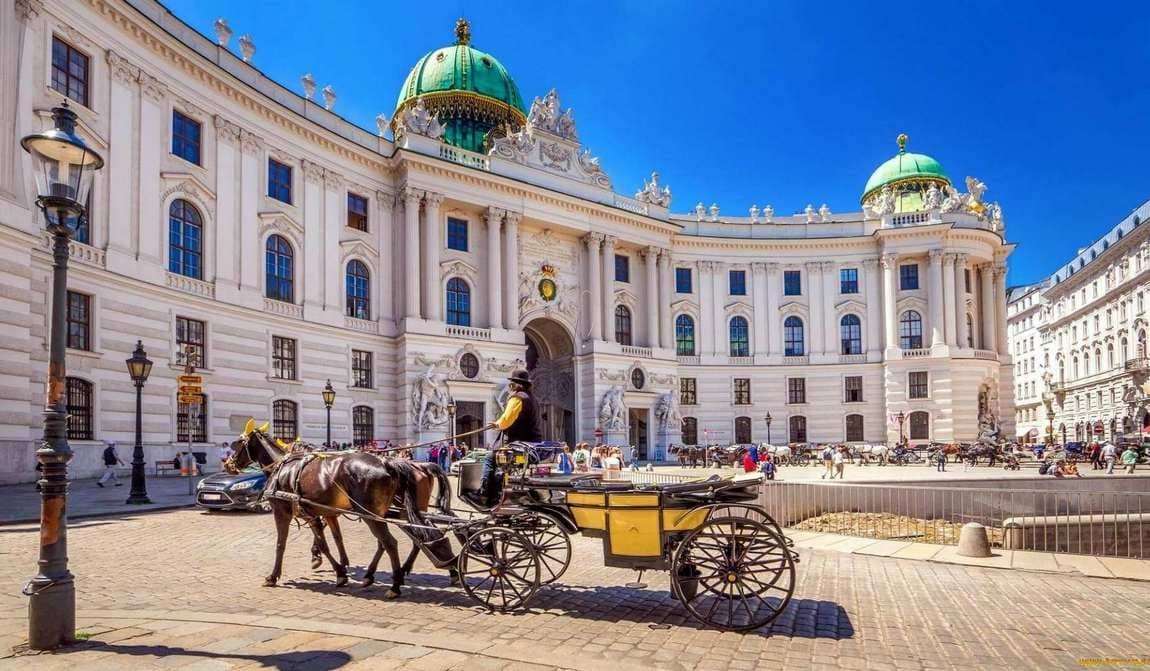
This large government and museum complex, located in the very heart of the Austrian capital (nearest metro station: U3 Herrengasse), perfectly complements any top 10 list of places in Vienna. For business travelers and tourists who value their time and arrive on the Kyiv–Vienna bus, this is one of the most convenient places to begin exploring the city. Passage through the inner courtyards of the residence is free.
The museum exhibitions are open from 9:00 a.m. to 5:30 p.m. (a combined ticket costs about 18 euros), and it is there, under reliable protection, that the unique Habsburg Treasury with imperial relics is displayed. If your budget is tight, a great alternative is to relax for free in Burggarten park. On its grounds you will also find Vienna’s famous Butterfly House, where admission is approximately 9 euros. You should allocate 2 to 3 hours for a full visit to the area. Eating in the elegant glass conservatory of Palmenhaus is not economically sensible; it is far more cost-effective to organize a light lunch on the lawn after buying fresh products at the supermarket across the street.
Rathausplatz

This spacious administrative square is a must-see for those who do not know where to go in Vienna in the second half of the day. Tram routes 1, 71, and D quickly get you to the Rathausplatz/Burgtheater stop. During the warm months, Vienna’s Rathausplatz turns into the venue for Europe’s largest free open-air film festival.
The main activity begins after 6:00 p.m. and continues until midnight. You can spend from one hour to the entire evening here. Many travelers focus only on how Vienna’s City Hall looks, but the neighboring Volksgarten park, famous for its luxurious rose garden, should not be ignored — it offers many interesting views. Accordingly, this is also Vienna’s best square for evening gastronomic discoveries: numerous festival stalls offer a portion of the traditional dessert Kaiserschmarrn for a reasonable 9 euros.
Prater Amusement Park (Prater)
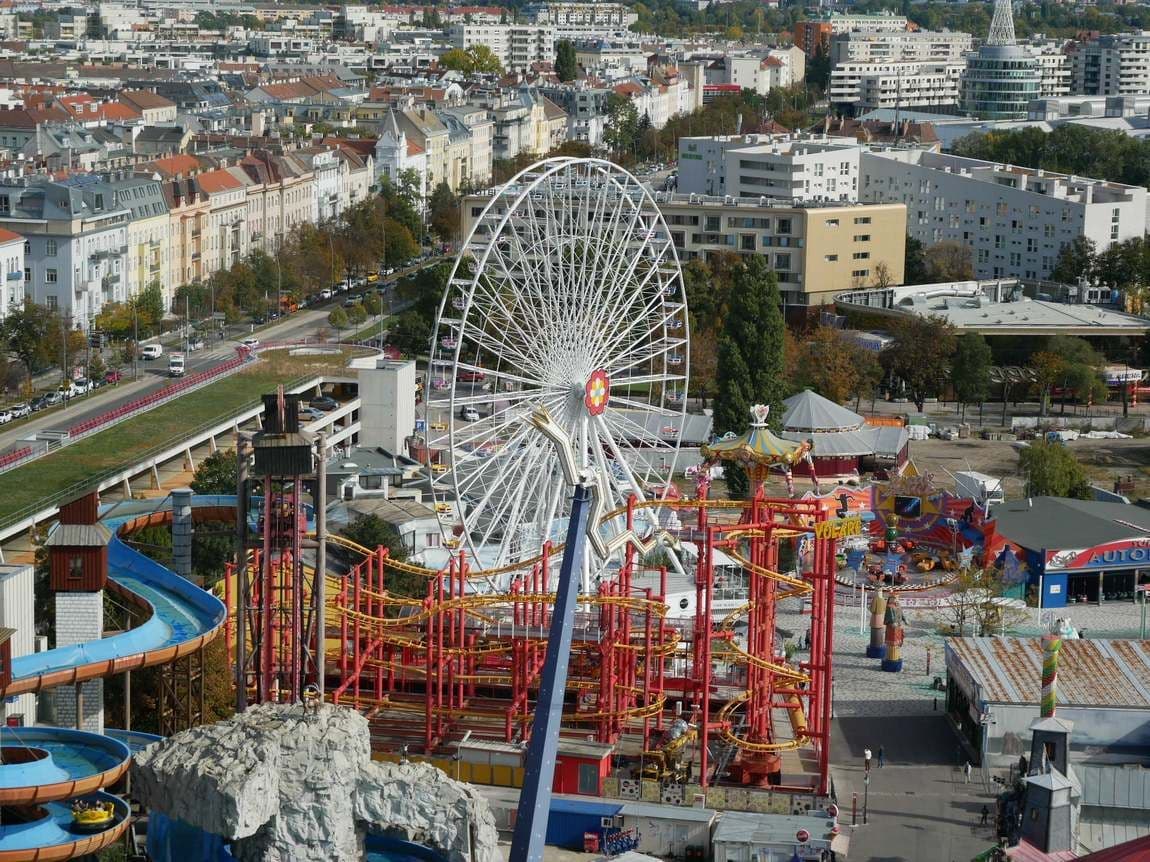
Vienna’s traditional symbols are harmoniously complemented by this large leisure zone (nearest transport hub: Praterstern station, metro lines U1 and U2). Entry to the general park area is free of charge, while payment of 3 to 6 euros is required only for the specific attractions you choose. The entertainment infrastructure operates from 10:00 a.m. until midnight.
If you are methodically deciding what to see in Vienna, a visit here will require at least 2 hours of your time to experience the city’s true informal tourist side. Experts warn against overly high expectations of thrills on the historic Ferris wheel — its speed is minimal and designed purely for panoramic observation. After active recreation, it is strongly recommended to visit the large restaurant Schweizerhaus and order their signature roasted pork knuckle.
Narrenturm (The Fools’ Tower)

What should you visit in Vienna outside the classic palace routes? Be sure to pay attention to this former psychiatric hospital, reached by tram lines 43 and 44 (Lange Gasse stop). This unique location gives a clear answer to the question of where to go in Vienna for those deeply interested in the history of European medicine. Admission to the Narrenturm costs about 8 euros, and the federal museum usually receives visitors from Wednesday to Saturday, from 10:00 a.m. to 6:00 p.m.
Set aside about 1.5 hours to explore this unusual exhibition. Professional guides strongly advise against visiting with children. A major advantage is that the museum is located on the grounds of the Altes AKH student campus, where the Stiegl-Ambulanz venue is known for its democratic prices and quality food.
Vienna Central Cemetery (Zentralfriedhof)
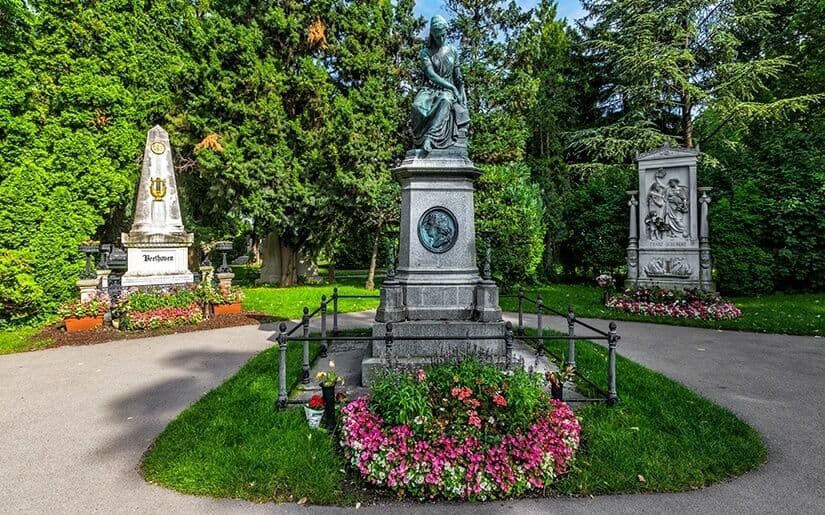
When studying Vienna’s most remarkable places, experienced travelers always single out this enormous memorial park, which is easy to reach by tram No. 71 (about 30–40 minutes from the center). Entry is completely free, and opening hours during daylight run from 7:00 a.m. to 7:00 p.m. Given the enormous size of Vienna Central Cemetery, the municipality has even launched an internal bus route.
Set aside about 2 hours for a proper visit. If you want to walk, you need Tor 1, whereas the most important historical graves of distinguished artists are located near Tor 2, so to save time you can use the internal route to get there. It is an impeccable option for travelers considering where to go in Vienna or what to do there in search of complete informational silence. Near the main entrance, the restaurant Schloss Concordia serves excellent local cuisine.
Hundertwasserhaus

If you are interested in Vienna sights whose architecture breaks familiar stereotypes, this residential complex is a must-see (tram No. 1, Hetzgasse stop). It is an excellent answer to the search for interesting places in Vienna for lovers of eco-design, and in general explains what Vienna is famous for in a modern context. Viewing the creative façade is free, and 30–40 minutes is enough for a detailed photo session.
A serious breach of etiquette is when tourists try to enter the residential stairwells, so be careful and show respect to local residents. It is better to devote that time to visiting the nearby café by Kunst Haus Wien. Hundertwasserhaus is best photographed with a wide-angle lens. It is also worth adding that for a more comprehensive understanding of the city, experts recommend visiting Vienna’s Technical Museum, which demonstrates the country’s engineering power, and also integrating Vienna’s historic suburban castles into your plan.
Financial Planning: Approximate Prices for Basic Expenses (2026 Season)
Vienna is a city that is pleasant to travel in, but it is important to understand the prices in advance so you do not overspend.
- A city day pass (24 hours) costs 8 euros. This is the most economical solution for intensive urban travel.
- A classic Viennese schnitzel, the city’s traditional dish, costs 15–24 euros. Genuine veal is expensive, while pork is a more affordable option.
- Traditional coffee (Viennese Melange) costs 4.50–6 euros. To buy coffee at a reasonable price, avoid places on the main tourist squares.
- Admission tickets to the city’s main galleries cost 15–30 euros. Advance online booking on official websites is strongly recommended.
This information should definitely be supplemented with updated data immediately before departure, since European pricing policy is dynamic. It is also worth noting that if there is a special municipal offer such as the Vienna Tourist Card, many of these costs can be optimized through the discount system.
Summary and Next Steps for Your Trip
Competent and timely planning guarantees that your visit to the Austrian capital will take place at the highest level. Thanks to this clearly structured information, you know exactly how to set your sightseeing priorities effectively and avoid the typical financial and logistical traps. Rational travelers from southern regions of Ukraine are increasingly choosing the comfortable Odesa–Vienna bus service by KLR for a convenient and cost-effective transfer.
Author: Olha Novytska
Prices as of April 2026.


