Spanish Cuisine 2026: TOP 10 Dishes You Must Try
Imagine this: it’s noon, the sun is already blazing, and in front of you on the bar counter is a plate of crispy jamón, a few olives, and fresh bread with tomato. The waiter isn’t in a hurry, the people next to you are laughing, and time itself seems to slow down. This is Spain — a country where cuisine has long gone beyond simple nourishment and turned into a philosophy of life.
At its core lies the concept of “Compartir” — sharing dishes, time, and mood. At one table, people order five or six dishes and taste everything together instead of focusing only on their own plates. Spain boasts one of the most regionally diverse culinary traditions in Europe: what people eat in Valencia is completely different from what’s on the table in Germany or Italy. The north — cloudy, rainy, and oceanic — offers vibrant seafood and bean-based cuisine; the hot south is known for cold tomato soups and golden saffron dishes; the central plateau is famous for roasted meats and goat cheese. This diversity makes any гастрономic journey endless and is the main reason travelers keep coming back.
To reach the heart of Spain without unnecessary stress or hidden costs, practical travelers are increasingly choosing a comfortable Kyiv–Barcelona bus route operated by KLR Bus: in the evening, you settle into an ergonomic seat, relax in the cabin, and enjoy the journey — thanks to comfortable conditions, the trip feels easy and smooth. Upon arrival, you find yourself right in the heart of a Spanish city without extra transfer fees or the unpredictability of flight delays. The money you save is better spent on the very Spanish dishes you came to experience.
The Gastronomic Logic of the Spanish Day: What and When to Eat
Understanding the rhythm of a Spanish day helps you avoid unnecessary expenses and closed doors. Breakfast (desayuno) — 8:00–10:00: typically coffee and toast or Pa amb Tomàquet. Lunch (comida) — 14:00–16:00: the main meal of the day; most restaurants offer a Menú del Día — three courses plus a drink and bread for €10–15, making it the smartest choice for a budget-conscious foodie. Dinner (cena) — not earlier than 21:00; many places between 17:00–20:30 may not serve guests at all. As for portion sizes:
- Tapa — €1–3, a small tasting portion
- Media ración — €4–7, a half portion, ideal for two
- Ración — €8–15, a full portion for 2–3 people
In the north — especially in the Basque Country and Navarre — Pintxos dominate: small dishes served on bread with a skewer. This is a unique gastronomic culture that deserves a dedicated evening and is one of the best ways to explore Basque cuisine without spending too much.
TOP 10 Dishes: From a Morning Bar to a Late Dinner
Spanish traditional cuisine has been shaped over thousands of years under the influence of different civilizations. The Romans introduced olive oil and winemaking, the Moors brought rice, saffron, almonds, and citrus fruits, while the New World in the 16th century added tomatoes, peppers, and potatoes — three ingredients without which it is impossible to imagine Spanish cuisine today. That is why traditional Spanish dishes are so diverse: each region absorbed its own layer of influences and transformed them into something unique. The ten dishes below are not just highlights from tourist guides, but a cross-section of this diversity — from a Catalan morning bar to a late-night churrería in Madrid, from the heat of Andalusia to the rainy Basque coast.
1. Bread with Tomato (Pan con Tomate / Pa amb Tomàquet)
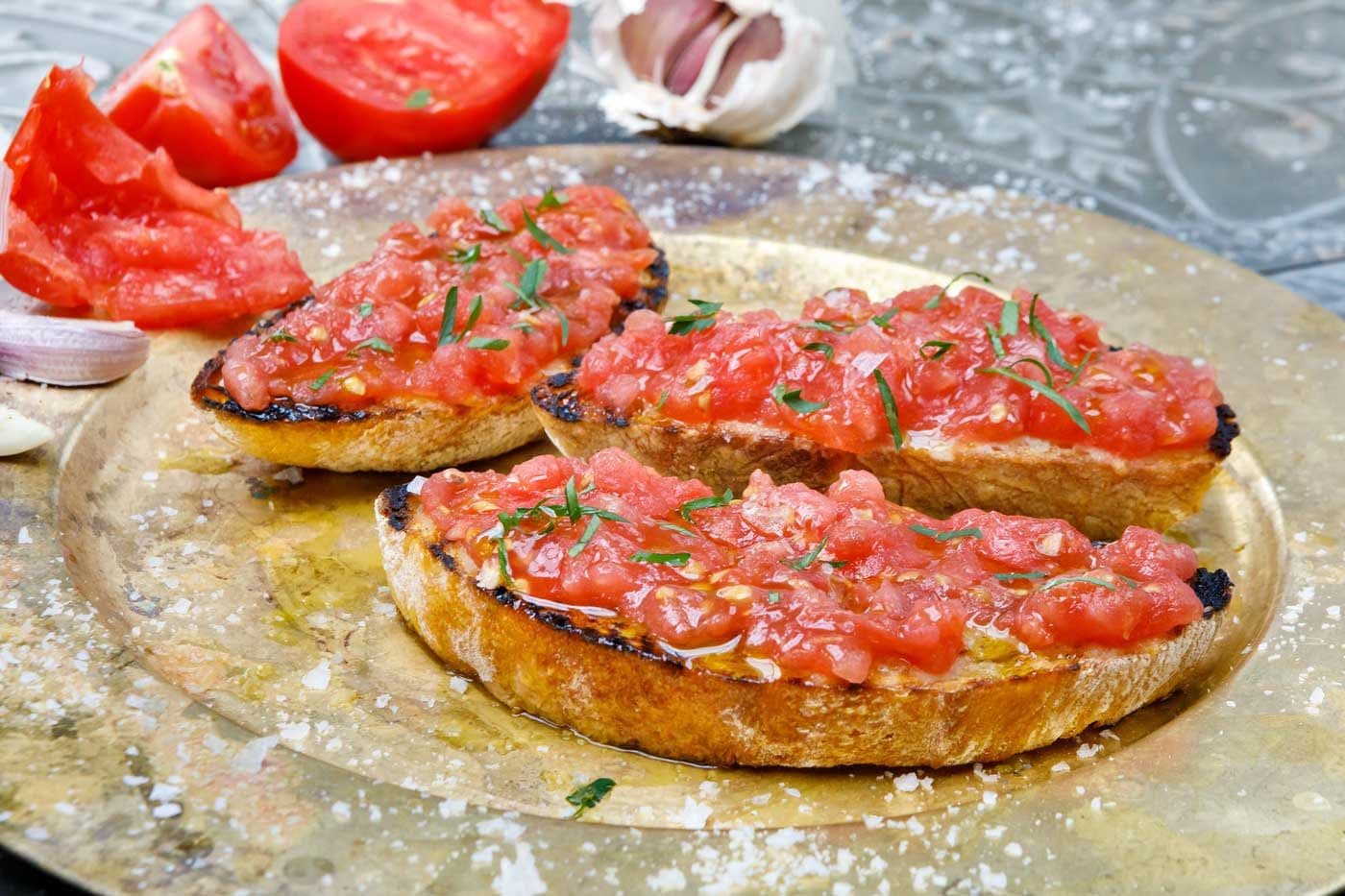
The perfect embodiment of a simple principle — ingredient quality above all. Toasted bread is rubbed with a ripe tomato directly onto the crust, drizzled with extra virgin olive oil, and finished with coarse salt. No canned spreads — just half a fresh tomato and slices of bread that absorb the juice.This popular Spanish dish of Catalan origin is equally respected in a modest seaside bar and in Michelin-starred restaurants of Barcelona.
A good sign: if the waiter brings half a tomato and suggests grating it yourself, the bread is fresh and the place is truly local. The version topped with jamón is a separate, equally delicious Spanish dish worth ordering on its own.Price: €1.50–3 Where: bars in Barcelona and Tarragona, Time: 8:00–11:00. Pairing: café amb llet or fresh orange juice
2. Spanish Omelette (Tortilla Española)

A thick potato omelette cooked in olive oil — one of the country’s key symbols and a traditional Spanish potato dish enjoyed for breakfast, taken on picnics, or ordered at 2 a.m. after a night out. The potatoes are slowly confited in oil — not fried — then mixed with beaten eggs and flipped twice.If the inside is slightly runny, that’s a sign of an authentic, signature Spanish dish — not a cooking flaw. The Madrid-style classic includes onions, while the Catalan version does not; this regional debate has been going on for years.Where to try it: in Madrid — Casa Lucio; in Barcelona — Mercat de la Boqueria.Price: tapa €2–4, ración €8–12. Best time: 10:00–12:00 and 20:00–23:00. Pairing: cold cerveza or Rioja wine
3. Ham Croquettes (Croquetas de Jamón)
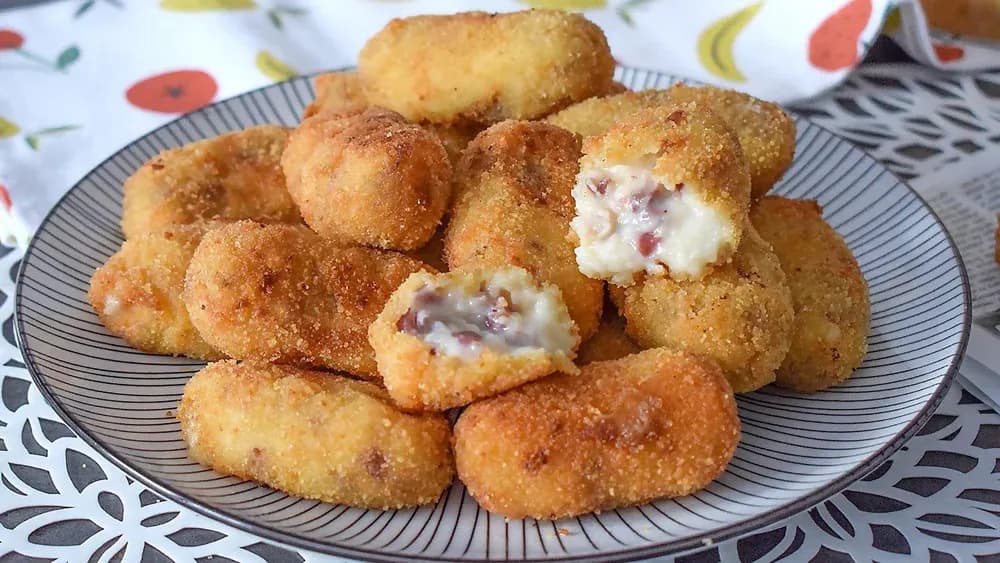
A crispy golden crust on the outside and a creamy, almost liquid filling of béchamel and jamón inside — Spanish meat dishes at their most refined. The rule is simple: if a croqueta is firm all the way through, it’s from yesterday’s batch, and no respectable bar would serve it. An authentic croquette barely holds its shape after the first bite, with a flowing interior that signals real culinary skill. Variations with cod (bacalao) or mushrooms (setas) are also common. Where to try: in Madrid — El Brillante; in San Sebastián — pintxos bars along Calle de Fermin Calbeton. Look for places where you can smell fresh frying coming from the kitchen.Price: €1–1.50 per piece. Best time: 12:00–16:00 and 19:00–23:00
4. Iberian Ham (Jamón Ibérico de Bellota)
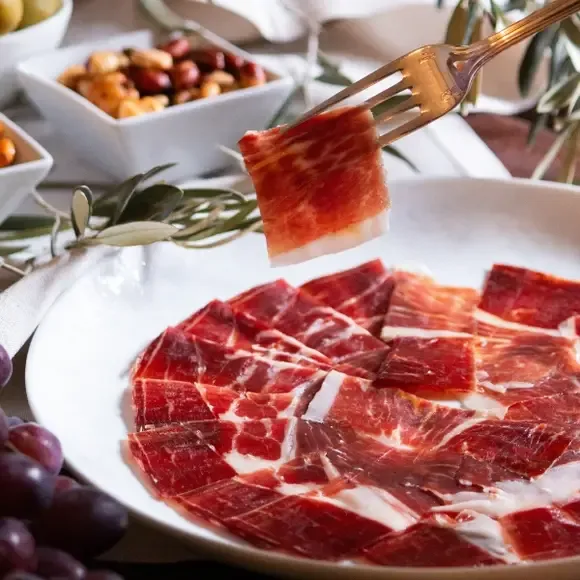
Jamón is not just cured pork leg — it’s a signature Spanish delicacy with a thousand-year tradition and a strict classification system. Black Iberian pigs roam freely in oak-filled dehesas and feed on acorns (bellota), which gives the meat its distinctive nutty flavor and marbled texture. Aging takes at least 36 months.This iconic Spanish meat dish is hand-carved by a cortador and served on a special stand (jamonera) at room temperature — never straight from the fridge. Vacuum-packed jamón means losing up to 70% of its flavor and all of its ritual. Where to try: in Madrid — Mercado de San Miguel and Enrique Tomás. In Extremadura, buying directly from producers can be 30–40% cheaper.Price: Serrano tapa €1–2, Ibérico de Bellota from €4. Pairing: fino sherry or Tempranillo wine
5. Paella (Paella Valenciana)

One of the most famous rice dishes in the world comes from the rice fields of Valencia, where rice has been cultivated for over a thousand years. Authentic Paella Valenciana consists of rice, chicken, rabbit, green beans (bajoqueta), and saffron — no seafood. The seafood version (paella de mariscos) is a completely different dish with its own culinary logic. Among Spanish chicken dishes, paella with rabbit is a Sunday family tradition rather than a tourist attraction. In Valencia, it’s cooked at home every Sunday and considered a true measure of culinary skill. The key quality indicator is socarrat — the slightly crispy, caramelized layer of rice at the bottom of the pan, which locals consider the most delicious part. Tourist restaurants along the seafront often serve overcooked rice without socarrat, a clear sign of rushed cooking and incorrect heat control. Where to try: in Valencia — La Pepica.Price: €12–20 per person (minimum 2 portions), Best time: lunch only, 13:30–16:00 Pairing: white Albariño wine
6. Cold Tomato Soups (Gazpacho / Salmorejo)
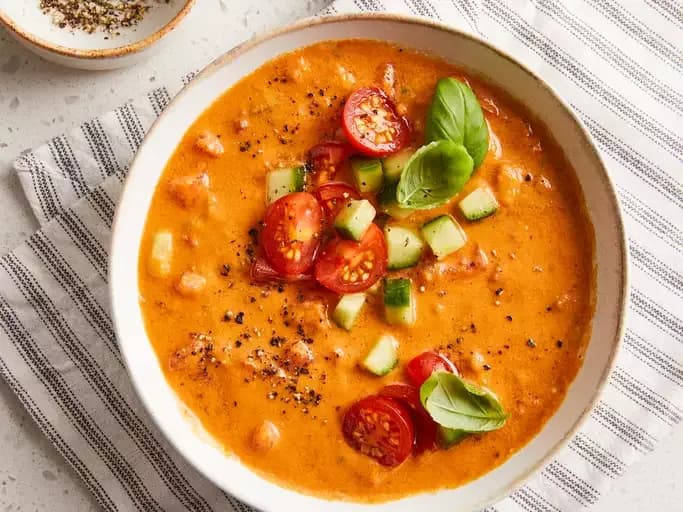
When temperatures in southern Spain hit +38°C, Andalusians turn to cold tomato soup — a solution that is brilliant in its simplicity. Gazpacho is a blended puree of fresh tomatoes, cucumber, pepper, garlic, bread, and olive oil, served ice-cold. In summer, locals often drink it from a glass between meals or even instead of breakfast.Its cousin from Córdoba — Salmorejo — is thicker, contains no cucumber, and is served with jamón and boiled egg, turning it into a полноценное light dish. In terms of richness, it often surpasses classic gazpacho.Among tomato-based Spanish specialties, this duo stands out as especially authentic — but strictly seasonal. If you see gazpacho on a winter menu in Madrid, it’s almost certainly a packaged version. Where to try: Seville, Granada, and Córdoba from May to September. Price: €3–6.
7. Basque Seafood Classics (Bacalao al Pil-Pil / Chipirones en su Tinta)
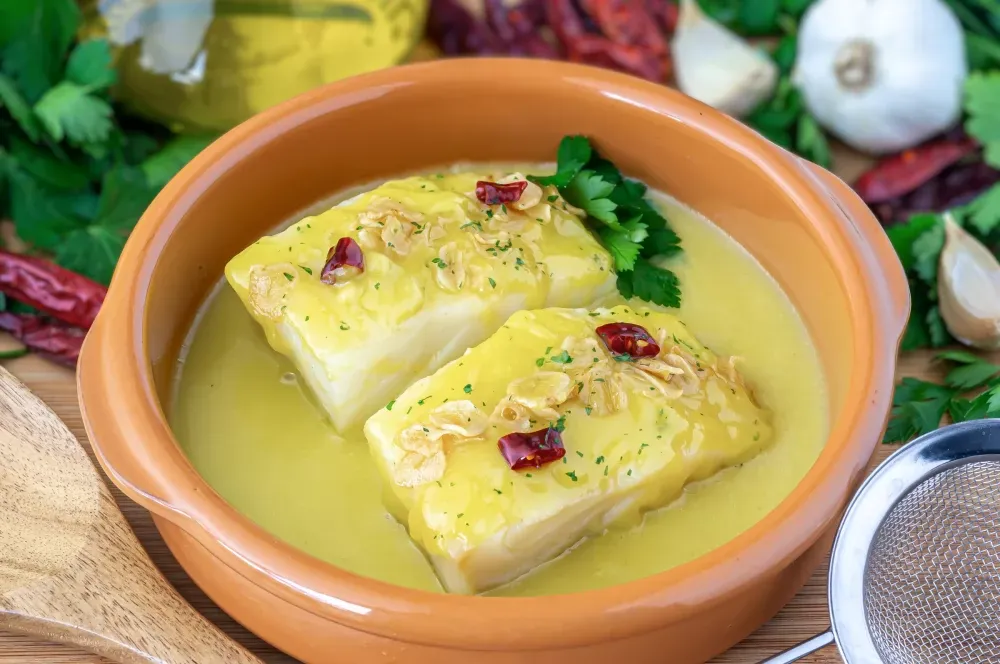
The Basque Spanish dish Bacalao al Pil-Pil is cod gently simmered in olive oil with garlic; the continuous shaking of the pot allows the gelatin from the fish skin to emulsify with the oil into a thick white sauce—without any thickener. Mastering this rhythmic motion is a skill passed down over years. Alongside it is Chipirones en su Tinta: small squid cooked in their own ink with rice—an entirely black dish with a deep, oceanic flavor. Among Spanish seafood dishes, these are some of the most distinctive specialties of the Basque Country.For travelers arriving by bus from Lviv to Barcelona and heading north, San Sebastián—with such flavorful bites—becomes a true gastronomic discovery. Price: Bacalao €14–20, Chipirones €10–16. Pairing: Txakoli (sparkling Basque white wine)
8. Asturian Bean Stew (Fabada Asturiana)
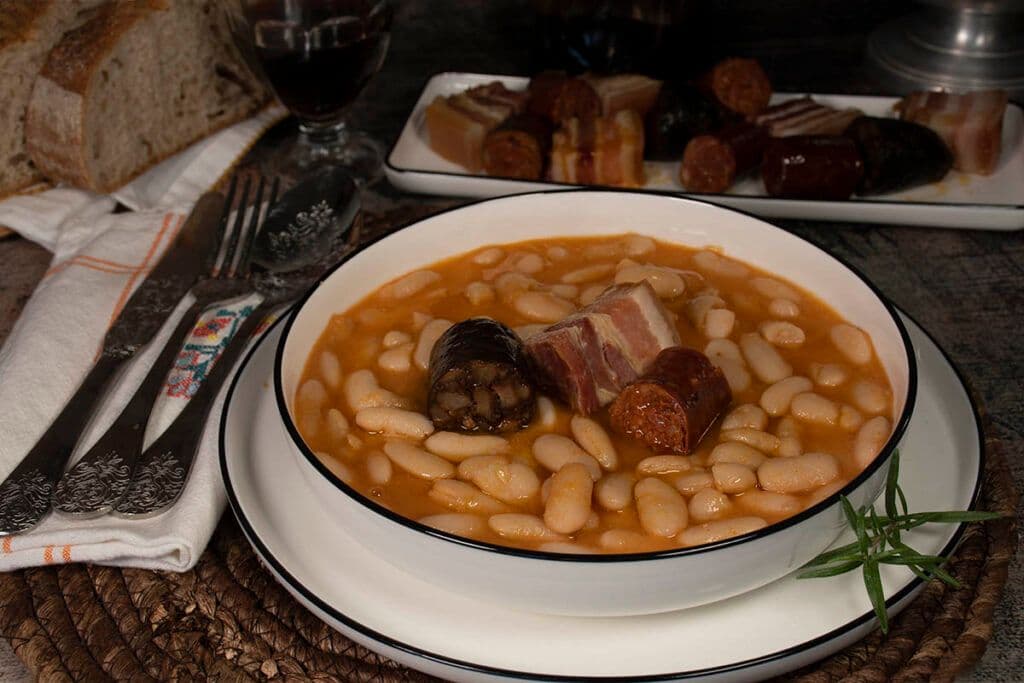
While the south escapes the heat with cold gazpacho, the north warms up with Fabada. This is a rich, hearty stew made with large white beans (fabes), blood sausage (morcilla), chorizo, and cured pork (lacón) — Spanish comfort food at its most honest and filling. Its texture comes entirely from the natural starch released by the beans after 3–4 hours of slow simmering — no thickeners involved. All ingredients are cooked together from the very beginning, creating a deep, unified flavor.
Among traditional dishes, Fabada Asturiana holds a place similar to borscht in Ukraine: simple, nourishing, and undeniably authentic. Where to try: traditional sidrerías in Oviedo and Gijón, where it’s prepared fresh every morning. Price: €9–15. Season: October–March. Pairing: Asturian cider (sidra natural), poured from a height by the waiter — an essential part of the ritual
9. Churros with Dark Chocolate (Churros con Chocolate)

Spanish sweet dishes often look modest, but deliver bold flavor — and churros prove it best.These sticks of choux-style dough are fried in hot oil and served with thick hot chocolate (chocolate a la taza). The dough contains no eggs or butter, while the chocolate is almost like a liquid pudding — dense, warm, and slightly bitter.This contrast between a crispy crust and rich hot chocolate has made churros Spain’s unofficial “hangover cure” and a favorite post-party snack. The best churrerías open early in the morning and again after midnight — those are the two ideal times to look for them. A queue stretching outside is the best sign of quality. Where to try: in Madrid — Chocolatería San Ginés, Pasadizo de San Ginés, 5, open 24/7 since 1894. In Seville — El Torno. Price: €3–5. Best time: 7:00–11:00 or after 23:00.
10. Catalan Cream (Crema Catalana)

The first documented recipe for this dessert dates back to Catalan manuscripts from the 14th century — two centuries earlier than French crème brûlée. Crema Catalana is made with milk rather than cream, flavored with orange or lemon zest, and prepared without vanilla. Before serving, a layer of sugar is caramelized into a crisp golden crust. Among Spanish desserts, this is the most elegant final note to any lunch in Barcelona. Traditionally, it is served on Saint Joseph’s Day, March 19, but today it can be found year-round. Where to try: Can Culleretes, Carrer dels Quintana, 5 — the oldest operating restaurant in Barcelona, open since 1786.Price: €4–7. Pairing: solera sherry or Catalan Moscatel.
Budget Planning: Estimated Prices for the 2026 Season
Spain is a country where you can eat well on any budget. Here’s a curated list of popular dishes worth trying during your trip:
- Pan con Tomate costs around €1.50–3. It’s best enjoyed in bars across Barcelona or Tarragona in the morning, typically between 8:00 and 11:00 AM.
- Tortilla Española usually costs between €2 and €12. You can try it at Casa Lucio in Madrid or at Mercado de La Boqueria in Barcelona.
- Croquetas de Jamón are priced at approximately €1–1.50 per piece. Look for them at El Brillante in Madrid or in pintxos bars across San Sebastián. -** Jamón Ibérico de Bellota** starts from €4 per portion. A popular place to try it is Mercado de San Miguel in Madrid.
- Paella Valenciana typically costs €12–20 per person. It’s best enjoyed in Valencia, for example at La Pepica, traditionally during lunchtime.
- Gazpacho or Salmorejo usually cost €3–6. These refreshing cold dishes are especially popular in Seville, Granada, and Córdoba during the May–September season.
- Bacalao al Pil-Pil costs around €14–20. You can try it in Casco Viejo in Bilbao or along Calle Fermin Calbeton in San Sebastián.
- Fabada Asturiana typically costs €9–15. It’s best enjoyed in traditional cider houses in Oviedo and Gijón during the colder months, from October to March.
- Churros con Chocolate cost around €3–5. A classic spot to try them is Chocolatería San Ginés in Madrid, which is open 24/7.
- Crema Catalana usually costs €4–7. In Barcelona, you can taste it at one of the city’s oldest restaurants — Can Culleretes.
Establishments in tourist-heavy areas — Las Ramblas, the Valencia seafront, and Puerta del Sol — are on average 40–60% more expensive compared to places where locals usually dine.The Menú del Día — three courses plus a drink and bread for €10–15 — remains the best-value option in any region. Prices are актуальні станом на April 2026.
How to Tell a Real Restaurant from a Tourist Trap
You can’t fully experience traditional Spanish cuisine in places designed only for tourists. Here are a few reliable signals to guide you:
- A chalkboard menu with just a few dishes that change daily is a strong sign of a local spot with fresh cooking.
- Laminated menus with glossy photos in multiple languages — especially when there are promoters inviting you in — are a clear reason to keep walking.
- If, at lunchtime, most tables are occupied by Spaniards (families, locals with laptops) and there’s a queue — that’s the best proof of quality.In Granada and Almería, the tradition of free tapas with every ordered drink still exists. If the waiter doesn’t offer you a tapa choice — it’s likely not the right place.
- Another practical clue: restaurants displaying food photos or colorful plastic replicas in the window are classic tourist traps, regardless of the region.
And the most important insider tip: signature Spanish dishes made with pimentón de la Vera — such as chorizo, fabada, and marinated vegetables — are best tasted in their region of origin. Extremadura, Asturias, and Andalusia offer not a tourist imitation, but a living culinary tradition — and the difference is obvious from the very first bite.
Final Thoughts & Next Steps for Your Journey
Smart planning ensures that your gastronomic route is remembered not for overpriced venues, but for authentic flavors. From Catalan Pan con Tomate to Asturian Fabada, from Andalusian Gazpacho to Basque Bacalao al Pil-Pil — Spanish national dishes are as diverse as the regions themselves. Each dish is a window into local identity and climate logic: the hot south favors light and refreshing meals, while the rainy north leans toward rich and hearty food. With this guide, you now know what to order, where to find authenticity, and how much it will cost. Practical travelers are increasingly choosing a comfortable Kyiv–Madrid bus route with KLR Bus — no transfers, no hidden fees, and a fixed schedule that allows you to plan every day of your trip with precision. Browse current routes and book your tickets on the KLR Bus website — and soon enough, you’ll be rubbing fresh tomato onto crispy bread in a small bar somewhere in Barcelona.
Author: Inha Tsvilenko
Prices as of April 2026.