Rome: interesting things to see in the city
Rome is a city that has attracted travelers from all over the world for centuries with its rich history, unique architecture and atmosphere that combines antiquity with modernity. From the Colosseum to the Vatican, from the Pantheon to the Spanish Steps, this is a place where every corner is filled with cultural heritage. Rome always impresses with the scale of its sights, and its landmarks are a must-see.
However, there are many interesting places off the usual tourist routes that often go unnoticed. These are exactly the locations what can be seen in Rome, where you can learn about the real life of the city, enjoy its cozy atmosphere and experience another side of the Eternal City. In this article, we will tell you about such little-known, but no less charming corners of Rome that deserve your attention.
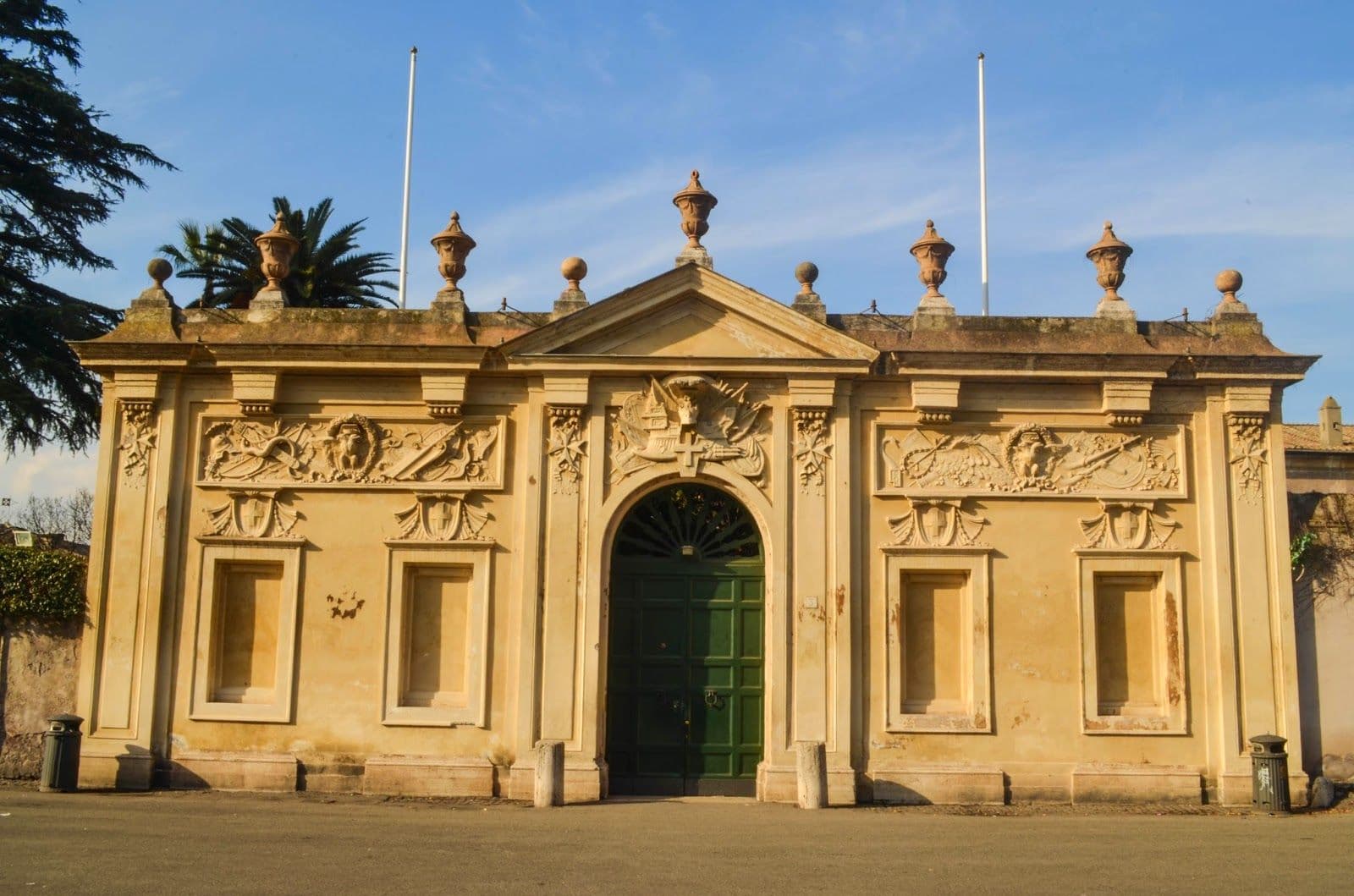
Keyhole of the Order of Malta
The keyhole of the Order of Malta, located on the Aventine Hill, is one of the most mysterious and interesting monuments of Rome. It is located at the gates of Piazza Cavalieri di Malta, which belongs to the Order of Malta. The peculiarity of this place is the view from the keyhole: if you look inside, you can see a perfectly adjusted perspective that opens the dome of St. Peter's Cathedral. This striking view has been preserved thanks to the special planning of the order's garden, which created this unique optical effect.
Orangery
The Orange Garden (Giardino degli Aranci), located on the Aventine Hill, is a cozy place to relax in Rome. Officially named the Savello Garden, this park is known for its picturesque avenues lined with orange trees and great views of the city. The garden terrace offers a panoramic view of the Tiber River, the dome of St. Peter's Cathedral and others interesting places of Rome. The calm atmosphere, the fresh aroma of citrus fruits and the shade of trees make this place ideal for walking and enjoying the beauty of Rome.
Apart from the orange trees, the Savello Garden is also famous for its architectural simplicity and attractive sculptural elements that add to the atmosphere of peace and harmony. This place has become popular with locals and tourists alike due to its ideal location, with easy access to other points of interest such as Basilica di San Sabino and Bodiglio. The Orange Garden is not only a natural oasis in the heart of the city, but also a great photo spot to capture unique moments of Rome.
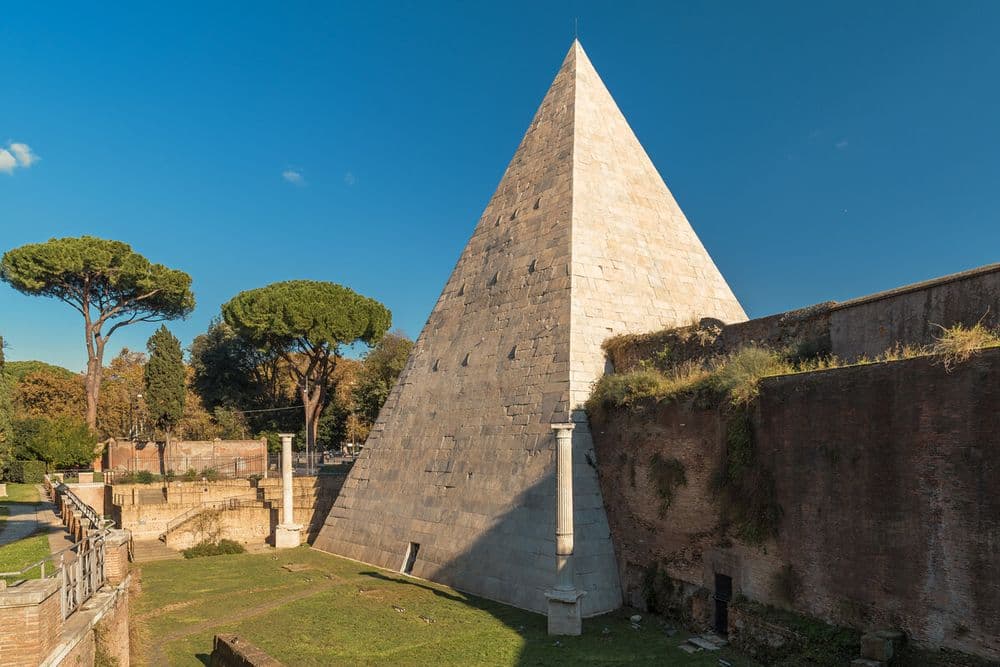
Pyramid of Cestius
The Pyramid of Cestius, located next to the Gate of San Paolo, is one of the most unusual sights in Rome. This ancient tomb, built in 12 BC. for the Roman master Gaius Cestius, impresses with its shape and size - the pyramid reaches 36 meters in height. Inspired by Egyptian architecture, it has retained its unique white marble cladding. Today, the Pyramid is surrounded by a Protestant necropolis and is not only a historical, but also an architectural masterpiece, illustrating the diversity of cultural influences in Rome.
The Pyramid of Cestius is one of the few ancient Roman structures that has survived to this day in its original form. It is a vivid example of how the Romans combined local architectural traditions with the influences of other cultures, in particular Egyptian. The pyramid was part of a large necropolis where wealthy Romans were buried, and serves not only as an architectural monument, but also as evidence of the interaction of Rome with other civilizations of that time. This place is especially interesting for lovers of history and archeology, because it allows you to feel the spirit of Rome on the border of two cultural eras.
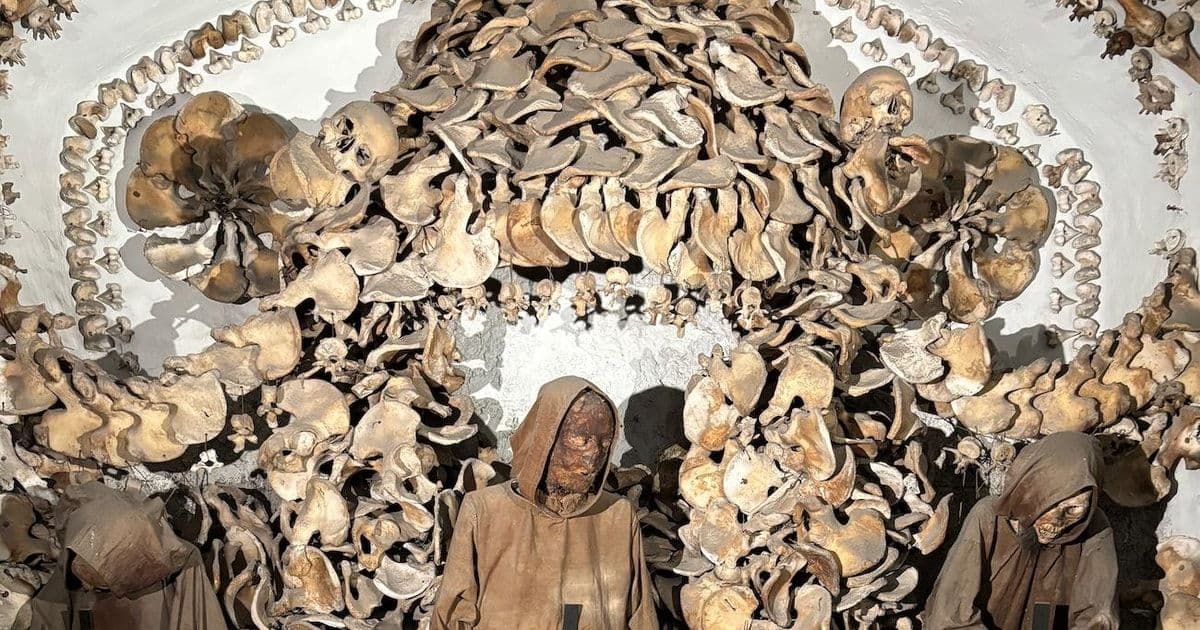
Crypt of Capuchins
The Capuchin Crypt, located under the church of Santa Maria della Concecione on Via Vittorio Veneto, is one of the most mysterious and at the same time unusual places in Rome. It consists of six small chapels decorated with the bones of about 4,000 Capuchin monks. The ceiling, walls and even the chandeliers of the crypt are made of human remains, symbolizing the transience of life. This museum of death impresses with its philosophical depth and at the same time demonstrates a unique approach to art that reflects the attitude to death in the 17th century.
The ancient quarter of Trastevere
The ancient quarter of Trastevere is located on the west bank of the Tiber and is one of the most authentic areas of Rome. This place attracts with its narrow streets paved with cobblestones, atmospheric squares and buildings with bright facades covered with ivy. Trastevere is famous for cozy restaurants where you can taste traditional Roman cuisine and lively cafes that create a relaxed atmosphere. It is also home to ancient churches such as the Basilica of Santa Maria in Trastevere, famous for its mosaics, and picturesque corners perfect for leisurely strolls.
Church of San Clemente
The Church of San Clemente, located near the Colosseum, is a unique multi-layered monument of Rome that reveals the history of the city on different levels. This basilica impresses with its architectural and historical features, because it was built on the ruins of several previous buildings, starting from the time of Ancient Rome. Among the main features of the church:
12th century mosaics that decorate the apse and impress with their detail and symbolism;
underground levels, where the remains of the early Christian basilica of the 4th century have been preserved;
even deeper - the ruins of the pagan temple of Mithras and ancient Roman buildings;
frescoes illustrating scenes from the lives of saints.
A visit to San Clemente is a true journey through the ages that allows you to gain a deeper understanding of the history of Rome. This multi-layeredness makes it unique not only in the city, but also in the whole world.

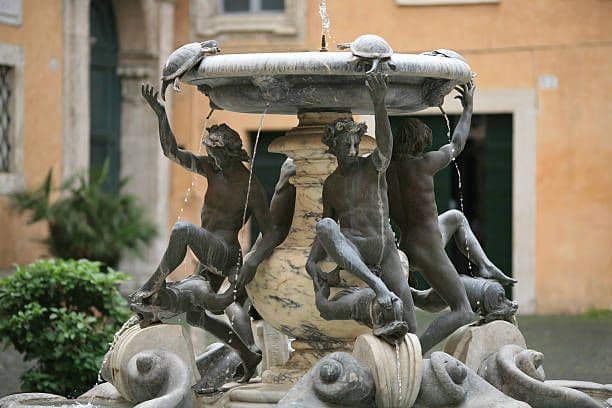
Turtle Fountain
The Turtle Fountain (Fontana delle Tartarughe) is located in the small Piazza Mattea in the historic center of Rome. This elegant Renaissance fountain was created in the 16th century by Giacomo della Porta and decorated with sculptures by the Florentine master Taddeo Landini. It got its name from the small turtles that were later added to Lorenzo Bernini's composition. The fountain stands out for its grace: bronze boys support a marble bowl, and turtles look as if they are the ones helping the boys reach the water.
This fountain is not only aesthetically attractive, but also has an interesting legend. Duke Mattei is said to have ordered the fountain installed overnight to impress his bride's father. Since then, the turtle fountain has become a symbol of romantic stories and creativity that emphasizes the richness of Rome's cultural heritage. It is perfectly combined with the atmosphere of the city streets, which fills every visitor with a sense of harmony.
Catacomb of San Sebastiano
The catacombs of San Sebastiano are located on the Appian Way, in the southwest of Rome, not far from the ancient aqueduct. These are one of the largest and most famous catacombs of Rome, which date back to the III century AD. and is an important place of pilgrimage for Christians. The catacombs were founded on the burial site of Saint Sebastian, one of the early Christian martyrs, whose tomb is located here.
The peculiarity of these catacombs is their huge underground labyrinth, which stretches for several kilometers. Inside you can see ancient frescoes depicting biblical scenes, as well as early Christian inscriptions and symbols, including a fish and a cross. Visiting the catacombs is an opportunity to immerse yourself in the atmosphere of early Christianity and learn more about the religious traditions of that time.
Villa Torlonia
Villa Torlonia is located in the northern part of Rome, near Via Homentaha. This majestic residence once belonged to one of Rome's wealthiest families, and today it is one of the city's most interesting and lesser-known landmarks. The villa contains not only luxurious buildings, but also a beautiful park, which has become a popular place for walks. It is necessary to pay attention to:
Architecture in the style of neoclassicism, which is distinguished by the harmony of lines and elegance.
Parks and estates with exotic plants that create a unique atmosphere of peace.
Numerous pavilions, in particular, "Mazzi Casino" - built in the style of a country estate.
Thematic buildings, such as the "Devil's House", impress with their unusual architecture.
Villa Torlonia is not only a place to relax, but also a cultural center where you can learn about the history of the Roman aristocracy. Walks on its territory leave unforgettable impressions thanks to the atmosphere of harmony and peace.
The House of Frescoes on the Palatine Hill
The House of Frescoes on the Palatine is located on one of the seven Roman hills - the Palatine, where the imperial palaces were once located. It is one of the important archaeological sites of ancient Rome, containing the remains of luxurious imperial residences. A special feature of this house is the beautifully preserved frescoes, which give an idea of the luxury and atmosphere of the life of the Roman aristocracy.
The frescoes in the House of Frescoes on the Palatine are distinguished by bright colors and details depicting scenes from nature, mythological subjects and domestic scenes. They are an important source for the study of Roman art and everyday life during the era of the emperors. Visiting this place allows not only to get acquainted with the architecture and art of Ancient Rome, but also to see how Roman culture developed.
See all the sights of Rome with KLR Bus
Rome is a city that preserves a huge number of historical and cultural treasures, rich in traditions and sights, covering different stages of the development of civilization. Although most tourists usually only visit the famous places like the Colosseum or the Roman Forum, the city actually has many lesser-known but no less fascinating sights that are worth seeing. Such places as the Catacombs of San Sebastiano, the Turtle Fountain, Villa Torlonia and others will help you feel the real atmosphere of Rome. They allow you to delve into the various stages of the development of Rome, from the ancient period to the Middle Ages and the Renaissance.
When planning a trip to Rome, it is important to pay attention to convenient and comfortable transportation that will allow you to easily reach all these exciting places. For those who want to escape the noise of the big tourist flows and discover new aspects of Rome, KLR Bus offers convenient bus tours that include visits to the most interesting and lesser-known places of the city. This way of traveling allows you to comfortably move around the city and get the maximum experience from each stop.
Choosing KLR Bus for your trip is not only convenience and comfort, but also a guarantee that you will get vivid and unforgettable travel experiences. It doesn't matter if it's your first visit to Rome or you've been here before - we'll help you see the city from a new angle. Choose us for your travels and experience all the benefits of tourism at its best!