What you should know about public transport in Spain
Public Transport in Spain has a Developed Network Covering the Entire Country. From bustling cities to picturesque villages, traveling through Spain is convenient, affordable, and environmentally friendly.
This article will be your guide to the world of public transport in Spain.
What Public Transport Do Residents of Spain Use?
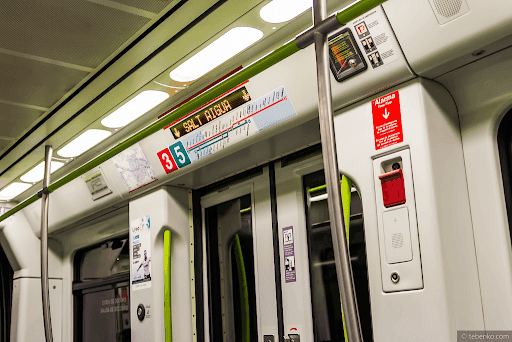
Probably, it's best to start with the essential transport in large cities, without which their residents would constantly be stuck in traffic - the metro.
Metro in Spain
The metros in Spain are a fast, convenient, and affordable way to get around in large cities like Madrid, Barcelona, Valencia, Bilbao, and Seville. The metro networks are well-developed, covering all major areas and landmarks.
The Madrid metro is not just a transportation system but a true network of underground streets that cover the entire city. Since the opening of the first line in 1919, the metro has become an integral part of Madrid life, constantly expanding and improving.
It has 13 lines, 300 stations, and a total length of 302.5 km, making it one of the longest in Europe. Trains run at short intervals, making travel around the city quick and convenient.
The Barcelona metro, which opened in 1924, has become an integral part of Barcelona life, constantly expanding and improving.
The Barcelona metro is operated by two operators: TMB (Transports Metropolitans de Barcelona) and FGC (Ferrocarrils de la Generalitat de Catalunya).
The extensive network has 11 lines, 164 stations, and a total length of 165.4 km, making it one of the longest in Spain.
The Valencia metro combines metro lines, trams, and suburban trains, making it convenient for traveling around the city, to nearby towns, and beaches.
Metro line 3 and tram lines T1 and T2 run to Valencia's popular beaches, such as Malvarrosa and Patacona.
The Bilbao metro stations, designed by renowned architect Norman Foster, impress with their futuristic shapes and use of natural light.
The entrance halls and platforms of many stations are adorned with works by famous artists and sculptors, making the metro a true open-air gallery.
The Seville metro, opened in 2009, has become an organic part of the city's transport system, combining modern technology with centuries-old history. The Seville metro is the shortest in Spain, with a total length of just 11.8 km and consisting of one line with 17 stations.
Buses in Spain
City buses are a comfortable and affordable way to get around in most Spanish cities. The bus networks are well-developed, covering all areas of the city and running at short intervals.
Intercity bus companies offer various routes and services, allowing you to reach any corner of the country.
Spain has one of the most developed bus networks in Europe, with over 4,000 routes connecting more than 5,000 towns and villages.
Regional bus lines are a convenient way to travel to small towns and villages in Spain, as they operate in areas where trains and intercity buses do not. Regional bus lines cover all regions of Spain, even the most remote ones.
Trams in Spain
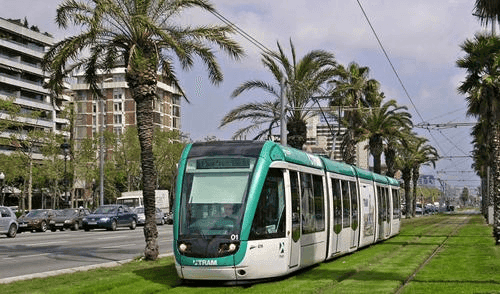
Tram networks in Spain are not as widespread as in some other European countries, but they are still present in some cities, offering a convenient and scenic way to get around.
Here are a few cities where you can find trams in Spain:
Barcelona: The tram network in Barcelona is one of the most well-known in Spain. It consists of 6 lines that cover the city center and the coast.
Alicante: The tram network in Alicante consists of 4 lines connecting the city center with beaches and suburbs.
Valladolid: The tram network in Valladolid is a modern system with 2 lines running through the city center.
Bilbao: The tram network in Bilbao is a system with 2 lines connecting the city center with the suburbs.
Malaga: The tram network in Malaga consists of 2 lines running through the center of Malaga and other cities in the region.
Trams are a convenient way to get around the city, as they run at short intervals and stop near major attractions.
Trains in Spain
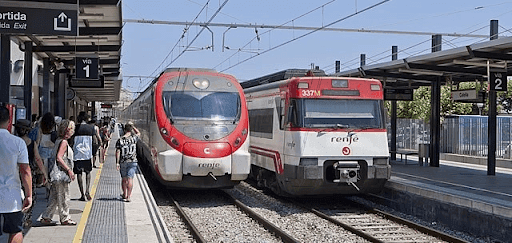
Spain’s railway network is well-developed, covering all major cities as well as many small towns and villages.
RENFE is the national railway operator of Spain, offering a wide range of routes and types of trains. RENFE owns and operates over 16,000 km of railway tracks and was founded in 1941.
AVE is a high-speed train service connecting major cities in Spain, significantly reducing travel times. AVE trains can reach speeds of up to 310 km/h, making them some of the fastest trains in Europe, and offer modern carriages with comfortable seats, Wi-Fi, power outlets for charging devices, a restaurant, and a bar.
Cercanías is a network of suburban trains that connect city centers with the suburbs, offering affordable prices and short intervals. Cercanías are integrated with other forms of transportation, such as the metro and buses, making city travel even more convenient.
Public Transport in Spain: Planning Your Route and Buying Tickets
For those planning to travel frequently by train in Spain, passes can be a cost-effective option. Here are a few examples:
Renfe Bonotren: This pass allows unlimited travel on any RENFE routes within a specific period;
Renfe Interrail Pass: Provides unlimited train travel in Spain and other European countries within a certain period;
Renfe Eurail Pass: Offers unlimited train travel in most European countries within a certain period.
Ticket prices for trains in Spain depend on the route, type of train, and travel time. Tickets for AVE trains are usually more expensive than those for regular trains.
To plan bus, train, and metro trips in Spain, you can use various apps and websites:
Google Maps: A convenient tool for planning routes with any type of transport, including buses, trains, and metro.
Moovit: Another popular route planning app offering similar features to Google Maps.
Rome2Rio: A website and app that helps plan travel routes between any two points worldwide.
Here are some examples of official websites of transport companies in Spain:
RENFE (trains): https://www.renfe.com/ (website not working);
AVE (high-speed trains): https://www.renfe.com/ (website not working);
Cercanías (suburban trains): https://www.renfe.com/ (website not working);
ALSA (buses): https://www.alsa.es/;
TMB (Barcelona metro and buses): https://www.tmb.cat/en/home.
Spain: Transport and Its Features
The operating hours of public transport in Spain can vary depending on the city, type of transport, and specific route.
Most city buses, trains, and metro services run from 6:00 am to 11:00 pm.
In some large cities like Madrid, Barcelona, and Seville, there are night bus and metro services.
It's important to note that almost all public transport in Spain is accessible for people with disabilities.
Many buses, trains, and metro stations are equipped with ramps and elevators, and most buses and trains have special seating areas for people with disabilities.
The Spanish government makes significant efforts to ensure the safety and cleanliness of public transport:
Installation of CCTV cameras;
Presence of police on platforms and in carriages;
Awareness campaigns;
Infrastructure improvements.
Despite these efforts, some passengers still complain about the safety and cleanliness of public transport in Spain, particularly regarding vandalism and pickpocketing.
How to Behave on Public Transport in Spain?
There are a few unwritten rules of conduct expected of passengers on public transport in Spain:
Be polite;
Do not block the aisle;
Do not speak loudly;
Eat and drink in moderation;
Apologize if you accidentally bump into someone.
Public transport staff in Spain are usually polite and willing to help. Do not hesitate to ask them for information or assistance if you need it.
Potential Issues and How to Avoid Them
Strikes occur from time to time and can lead to significant delays or cancellations of services.
Before your trip, it is advisable to check the transport company’s website or local news to find out if there are any planned strikes.
Be vigilant with your personal belongings, especially in crowded places. Do not carry valuable items if possible and use a bag or backpack that you can wear in front of you.
Do not leave valuable items unattended in the vehicle. Be aware of your surroundings and report any suspicious activity to the police. In case of theft, report it to the authorities immediately.
Public transport in Spain is a convenient, affordable, and eco-friendly way to get around. Understanding the public transport system can significantly enhance your travel experience in the country.
Plan your trip in advance – research routes and schedules to know how to get to your destination and download an app for route planning and ticket purchasing for public transport in Spain.


