Hot Springs of Germany: TOP 6 Thermal Resorts — A Complete Guide for Tourists
Dreaming of immersing yourself in the thermal resorts of Central Europe means dreaming of a special kind of отдых, where treatment and pleasure are inseparable. Germany’s thermal baths are not just hot water! They are a tradition tested over thousands of years, architectural luxury, and care for health all in one package. To reach this thermal paradise conveniently and at a reasonable price, use KLR Bus coaches, which operate between Ukraine and Munich, Frankfurt, Cologne, Stuttgart, and other cities in Germany.
What Is Important for a Tourist to Know Before the Trip
Before buying a ticket and packing your suitcase, it is worth familiarizing yourself with the peculiarities of Germany’s thermal culture. Knowing the local rules and traditions will help avoid awkward situations and make your отдых as comfortable as possible. The main organizational nuances to consider before traveling:
-
What should you take with you? At least two large towels: one for the shower, the second — to fully lie or sit on in the sauna, rubber slippers, and a bathrobe.
-
A bracelet instead of a wallet. At the entrance, visitors are given an electronic chip. It serves as a locker key and a virtual card for paying for food or additional services (payment is made at the cashier upon exit).
-
Etiquette and safety. A thorough shower before entering the pools is mandatory, bringing glass containers is strictly prohibited, and in special relaxation zones (Ruheraum) there is a cult of absolute silence.
Following these simple but important rules will allow you to easily immerse yourself in the atmosphere of German wellness culture. You will be able to fully relax without being distracted by everyday inconveniences or remarks from the staff. Remember that respect for other people’s personal space is the foundation of a flawless отдых in Germany’s thermal complexes.
Before your trip, we recommend reviewing the German laws that every traveler should know for a safe and comfortable vacation.
FKK and Textilbereich — Rules for Bathing in Thermal Baths
When visiting Germany’s thermal baths, it is worth remembering that the tradition of FKK (Freikörperkultur — free body culture) is deeply rooted here: bathing without clothing in thermal zones is considered an absolute norm and is not perceived as something unusual. Most complexes are divided into zones:
-
FKK zone — for visiting without swimsuits and swimming trunks;
-
Textilbereich zone — where swimwear is mandatory;
-
mixed or neutral zones — where the rules depend on the specific time of day or the particular room.
In some establishments — for example, in Friedrichsbad and Kaiser-Friedrich-Therme — the entire complex is an FKK zone without exceptions. Violation of these rules may lead to removal from the complex without a refund of the ticket cost. Therefore, before visiting, be sure to check the current rules on the official website of the establishment.
Kurort, Bad and Kurtaxe — A Resort Visitor’s Dictionary
If the name of a city contains the word “Bad” (Bad Homburg, Bad Nauheim), this is an official resort status — a sign of the quality of the healing waters for which Germany’s hot springs are famous. “Kurort” means “health resort,” and this status is granted only to cities that meet strict sanitary and environmental standards.
In the vast majority of resort towns, tourists pay a Kurtaxe — a resort tax from 1.5 to 5 euros per day. In return, they receive: free Heilwasser (healing mineral water from local springs), discounts on admission to local attractions, and the right to free public transport within the resort area. Most complexes also offer Happy Hour — reduced rates during certain hours, mostly in the evenings on weekdays.
Who Should Avoid Germany’s Geothermal Springs
Despite the enormous benefits for the body provided by Germany’s geothermal springs, visiting thermal baths has certain contraindications. A visit should be postponed or cancelled in the following cases:
-
women during pregnancy — without written permission from an obstetrician-gynecologist;
-
people with cardiovascular diseases during an acute phase;
-
people with open wounds or infectious skin diseases;
-
children under 3 years old (or under 6 — depending on the rules of a particular establishment);
-
those who have recently undergone surgery.
If you have chronic illnesses, be sure to consult a doctor before the trip. However, there is also good news — the overwhelming majority of visitors bathe in thermal baths without any restrictions and receive nothing but pleasure.
The Best Thermal Springs in Germany — Overview of Resorts
Below is a detailed overview of the six best thermal destinations: where they are located, how to get there, how much admission costs, and what additional services are available on-site. Each of these complexes has its own unique atmosphere and specialization. From large-scale family centers with water slides to cozy aristocratic spa zones for deep relaxation in complete silence — we have selected the most interesting locations for every taste. In addition, all of them are located in such a way that it is максимально convenient to plan a route to them after the arrival of your trip, making the journey comfortable from beginning to end.
Therme Erding (Munich) — Europe’s Record Holder
Therme Erding is an entire city of water entertainment. Located 35 km from the center of Munich, in the town of Erding, this wellness complex quite deservedly tops the list of the best thermal springs in Germany and is considered the largest in Europe: more than 35 thermal pools, unique Heilwasser from its own wells, the Galaxy water park, a sauna park, and a luxurious thermal hotel.
You can reach the complex from Munich Central Station in just 45 minutes by suburban train (S-Bahn) or bus. If you are planning a trip directly from Ukraine, a convenient option is a direct KLR Bus route from Lviv to Munich.
The thermal baths welcome guests daily from 9:00 AM to 11:00 PM, although the Galaxy water park operates on a slightly different schedule — from 10:00 AM to 10:00 PM. The cost of relaxation on weekdays starts from 22 euros for two hours, so it is difficult to classify it as a budget thermal destination. For those arriving with family or loved ones, advantageous family packages are available starting from 75 euros, and children under 3 years old may stay on the premises free of charge.
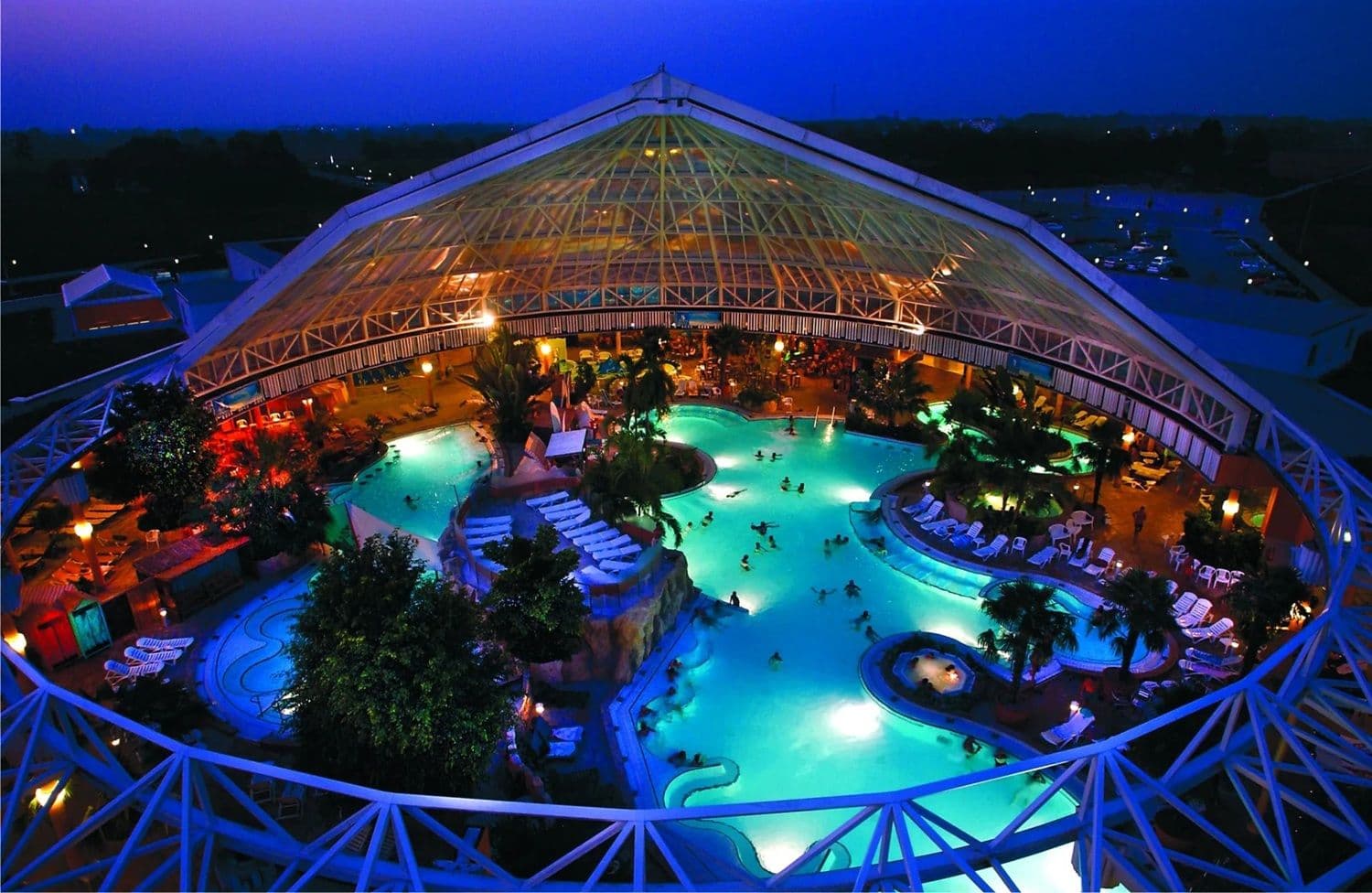
In addition to water entertainment, the complex offers excellent additional services. Guests can stay at the luxurious 5-star Therme Erding Hotel and visit numerous restaurants or cafés for every taste. For younger visitors, there is an exciting children’s water park, while adults can fully relax in the peaceful spa zones.
Wiesbaden — A City of Thermal Waters with a Thousand-Year History
Wiesbaden is one of the oldest resort cities in Europe, where Germany’s thermal waters reveal their healing potential to the fullest. The local underground springs are heated up to 66°C and emerge to the surface right in the city center. Even the ancient Romans built baths here, and in the 19th century Wiesbaden turned into a favorite resort of aristocrats and writers.

The main establishment is Kaiser-Friedrich-Therme (Langgasse 38–40): a full FKK regime, incredible Art Nouveau architecture, the famous Soletherme — salty thermal baths with a concentrated salt solution, which are especially pleasant to visit when choosing German thermal springs in winter.
The bathhouse welcomes visitors daily from 10:00 AM to 10:00 PM. The cost of two hours of relaxation is quite affordable: from 8 euros on weekdays and from 14 euros on weekends and holidays. As for food, you can have a light snack in the buffet directly on the territory of the complex. If you want a full lunch or dinner, the city center with numerous restaurants and cozy cafés for every taste is located just a 5-minute walk away.
The most convenient way to get to Wiesbaden from Ukraine is to use the KLR Bus route Lviv — Frankfurt, and from there transfer to a regional train that will take you to the resort in approximately 40 minutes.
Baden-Baden — An Aristocratic Thermal Resort
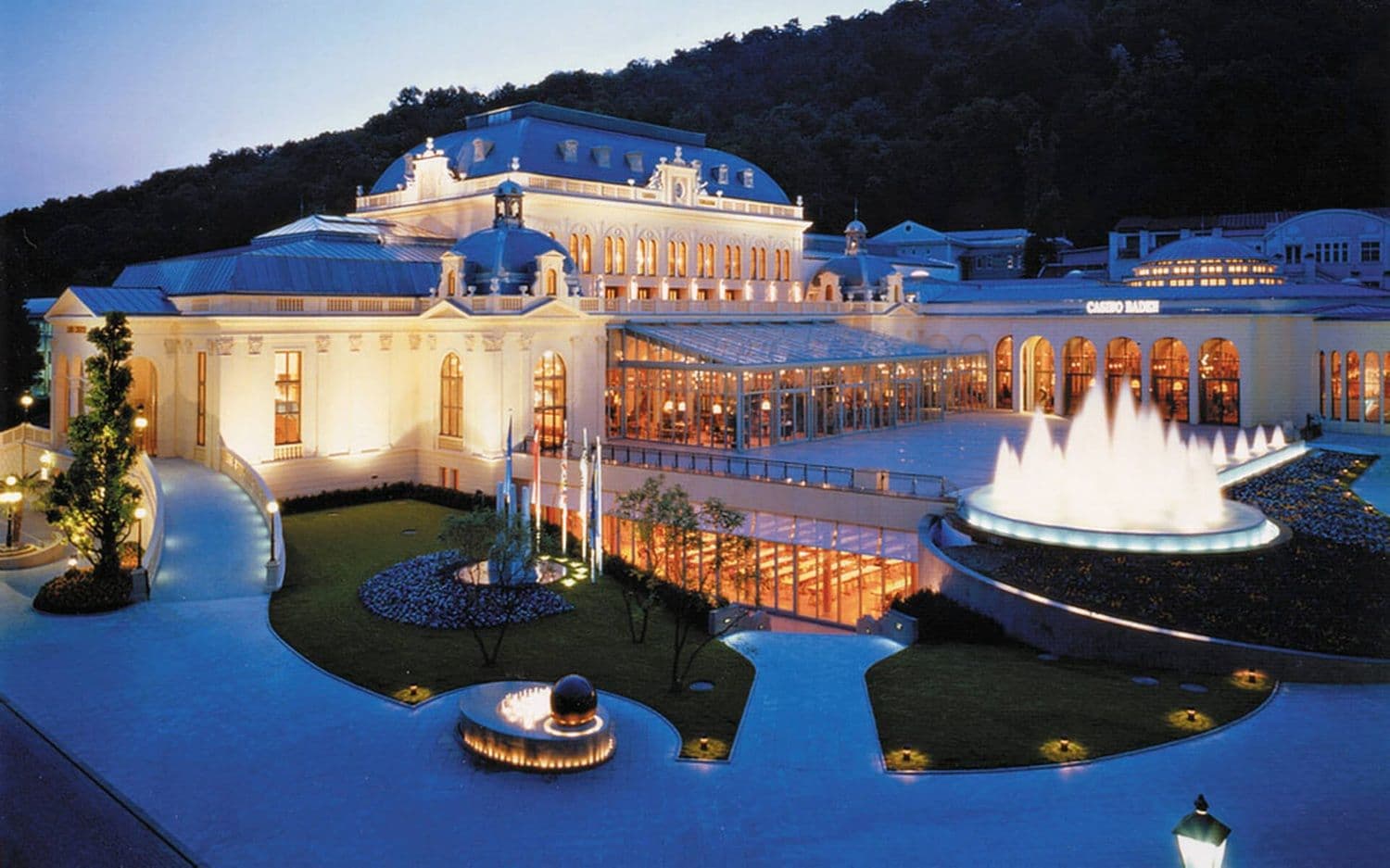
Baden-Baden is a city whose name literally means “bathing-bathing.” It is here that the famous Mineraltherme — mineral thermal water from a depth of more than 2,000 meters — is extracted. For two millennia, these hot springs have attracted those seeking elegant relaxation and genuine treatment. In Baden-Baden there are two main thermal establishments:
-
Friedrichsbad — a luxurious 19th-century bathhouse. Mandatory FKK regime. The restorative “17 baths” program from €35.
-
Caracalla Therme — a modern complex with FKK and Textilbereich zones, a year-round outdoor pool, and various saunas. From €17 for 2 hours.
Both establishments offer a wide selection of massages, spa procedures, and dietary meals. Nearby there are hotels for every budget: both luxurious relaxation and budget отдых at thermal springs in Germany are possible here if you choose a 3-star option. From Stuttgart to Baden-Baden — about 45 minutes by regional train.
Aachen — The Hottest City in Central Europe
Aachen has been famous for its healing waters since the time of Charlemagne — these thermal baths have a deep and rich history. The local healing waters are among the most sulfur-rich and hottest in Central Europe — up to 74°C at the outlet from underground. The city is located on the border of Germany, Belgium, and the Netherlands, which gives it a special international character.
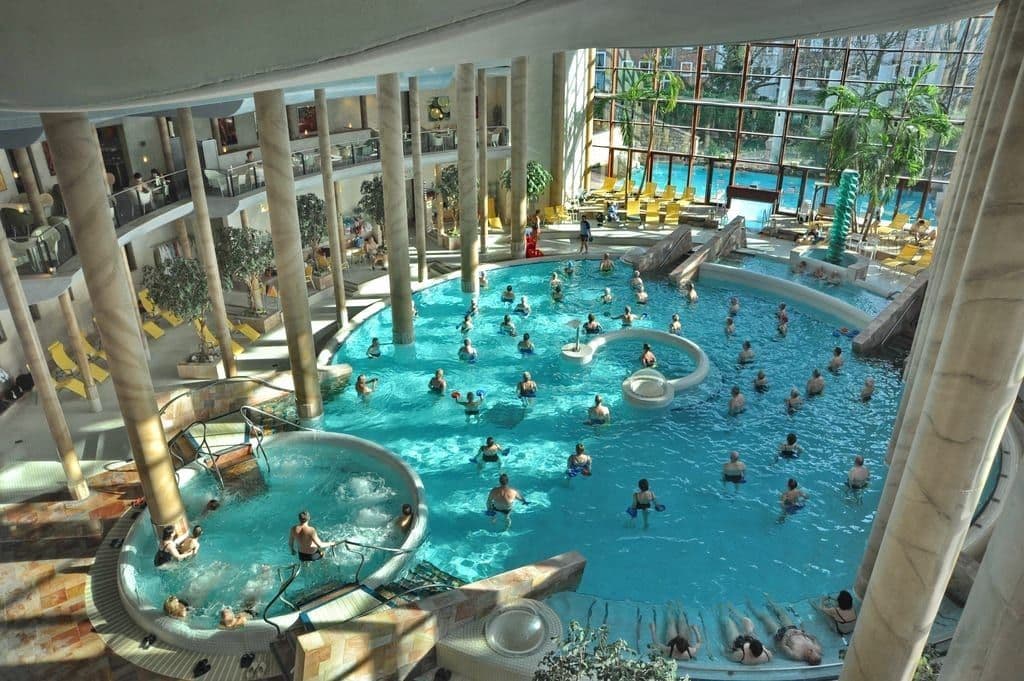
The main balneological center of Aachen is Carolus Thermen (Stadtgarten 7): several indoor and outdoor thermal pools, an extensive sauna landscape, aqua spa, and a wide selection of wellness programs allow visitors to practically experience how powerful Germany’s thermal waters are. The complex hospitably opens its doors daily from 9:00 AM to 11:00 PM. The price of a basic ticket for two hours of relaxation starts from 14 euros, while pleasant discounts are available for students and pensioners. Finding accommodation will also not be a problem: hotels of various price categories are located directly near the thermal baths, and closer to the city center the choice becomes even wider — from quite budget hostels to exquisite boutique hotels. It is convenient to get to Aachen through Cologne via the KLR Bus Cologne — Lviv route, and from Cologne to Aachen — 40–60 minutes by regional train or ICE.
Freiburg and the Black Forest Region — A Thermal Treasure in the South
Freiburg is a sunny and green city that serves as the gateway to the Black Forest. Freiburg itself has Aqua-Fun-Bad — a city wellness complex with heated pools and saunas. But the real gems are the surrounding resorts of the region, which can confidently be included among the best thermal springs in Germany:
-
Badenweiler — a quiet aristocratic resort with the ruins of a Roman bathhouse and a modern thermal spa;
-
Wildbad in the Black Forest — a classic Kurort with traditional thermal baths and beautiful natural trails;
-
Bad Bellingen — a lesser-known but cozy resort with its own mineral springs.
From Freiburg to Stuttgart — about 1.5 hours by train.
Cologne — Claudius Therme with a View of the Cathedral
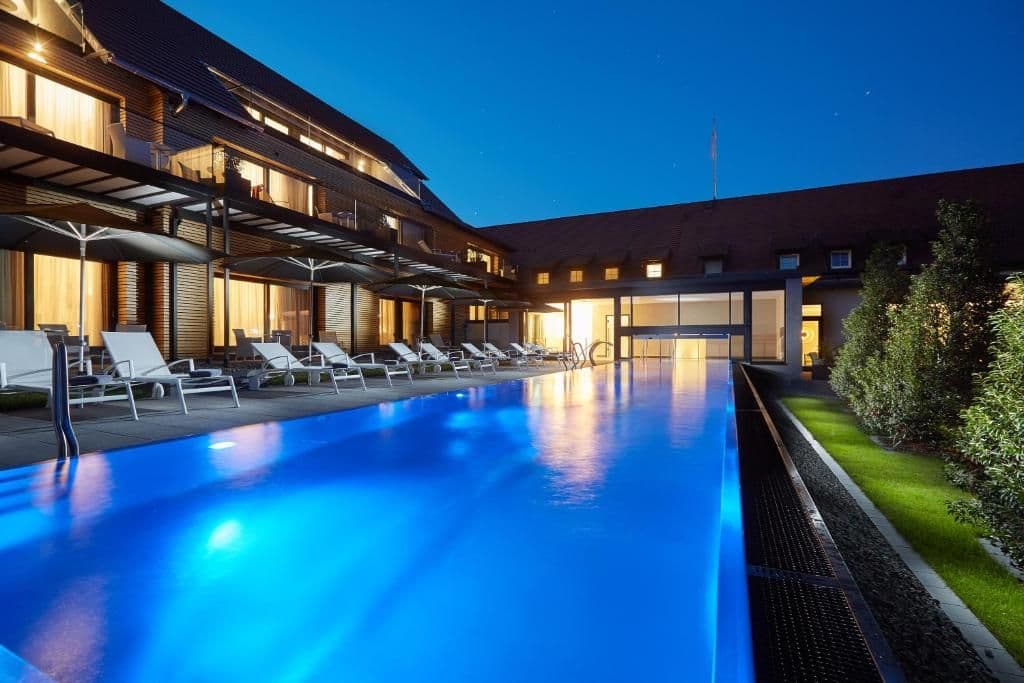
Cologne is more than just a transit city. In the picturesque Rheinpark, on the banks of the Rhine, Claudius Therme is located — a place that perfectly complements city excursions and shows hot springs from a completely new perspective. From the outdoor heated pool, there is an incredible panoramic view of Cologne Cathedral — included in the UNESCO list. Claudius Therme can be found in Cologne at Sachsenbergstraße 1.

The establishment is open to visitors daily from 9:00 AM to 11:00 PM. The cost of two hours of relaxation on weekdays starts from 15 euros, however it is worth considering that on weekends and holidays the rates increase somewhat. The infrastructure of the complex offers everything necessary for a полноценный rest: there are healing salty thermal baths, a spacious sauna park, a restaurant, and a cozy lounge zone. However, the real highlight is the outdoor heated pool, from which you can admire the Rhine and the majestic Cologne Cathedral directly while bathing.
Budget Relaxation at Thermal Springs in Germany — Tips
Budget thermal springs in Germany are a completely realistic option. An entrance ticket to most complexes costs from €8 to €25 depending on the duration, day of the week, and time. Here are proven ways to save significantly:
-
Choose weekdays — in most establishments prices are 20–30% lower compared to weekends and holidays.
-
Use Happy Hour — reduced rates usually apply from 5:00 PM to 7:00 PM or after 8:00 PM; check the schedule on the website.
-
Purchase a Deutschlandticket for €49/month — it covers all regional transport in Germany and allows you to travel cheaply from the KLR Bus stop to any thermal complex without additional payments.
-
Check discounts through Kurtaxe — in resort towns this fee often includes discounted or free admission to local attractions.
-
Look for family packages and subscriptions — beneficial if you plan several visits or travel with children.
Most complexes have free parking, but public transport combined with the Deutschlandticket most often turns out to be a cheaper and more convenient option. Thanks to this ticket, you can combine several cities and thermal complexes in one trip without unnecessary expenses.
German Thermal Springs in Winter — The Best Time for Relaxation?
Winter is the ideal season for relaxation in warm water. German thermal springs in winter acquire a special charm: steam rises above the heated pools, while around them are snow-covered parks or brightly decorated Christmas towns. Most complexes operate year-round without days off, and some extend their opening hours during the Christmas and New Year period. The advantages of visiting in winter are several strong arguments in favor of traveling during the cold season:
-
fewer tourists compared to the summer season and autumn holidays;
-
a special atmosphere — warmth and steam against the background of a winter landscape;
-
the opportunity to combine relaxation in thermal baths with Christmas and New Year markets, of which there are especially many in Baden-Baden, Wiesbaden, and Cologne;
-
lower hotel prices in resort towns during the “off-season.”
Winter is the ideal time for those seeking silence and effective recovery after a long journey. Even a few hours spent in warm mineral waters relieve fatigue and fill you with energy for several days ahead.
Plan Your Trip to Thermal Waters Today!
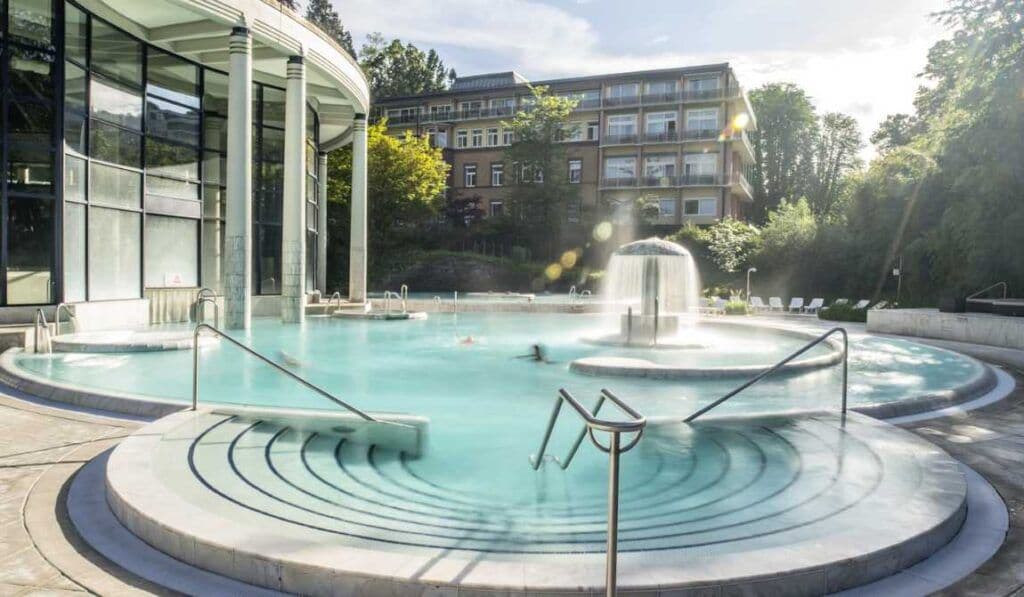
Germany’s thermal baths are a unique combination of thousand-year-old balneological culture and modern spa service. From the gigantic Therme Erding near Munich to the aristocratic bathhouses of Baden-Baden, from the ancient sulfur springs of Aachen to the panoramic Claudius Therme in Cologne — every traveler will find something of their own here. Hot springs attract millions of tourists from all over the world for a reason: here you can truly restore your health and simply have a great rest.
Plan your journey in advance — and buy KLR Bus tickets online for the route you need. From the bus stop to the thermal complex — only a few minutes by public transport, especially if you have a Deutschlandticket. The best thermal springs in Germany are already waiting for you!