TOP Thermal Springs of Italy: Where to Relax and Restore Yourself Among the Apennines
Italy is famous not only for the beaches of the Adriatic and Renaissance palaces — underground, there are dozens of hot springs in Italy that were used by the ancient Romans. It is convenient to get to the country, for example, by a comfortable Kyiv — Rome bus from KLR Bus, and from there continue to the most famous resorts — from alpine Bormio to Tuscan Saturnia. In this guide, we will explore which thermal waters of Italy are worth visiting, how much entrance costs, when it is better to travel, and how to organize a budget holiday at Italy’s thermal springs.
What You Need to Know Before Visiting Italian Thermal Baths
Culture and Etiquette in Thermal Baths
Italian thermal waters are mostly rich in sulfur and minerals, so the etiquette here is stricter than in neighboring countries. Unlike Hungary, Slovenia, or the Czech Republic, where textile-free rules are treated more casually, Italy has stricter regulations. Entering without a swimsuit, and especially topless swimming for women, is prohibited in public pools and most saunas. Almost everywhere, a swimming cap (cuffia) is mandatory — without it, you simply will not be allowed into the pool, but you can always buy one at the ticket office for a couple of euros. Rubber slippers are also useful: the floor around pools is slippery, and in some complexes, entering wet areas without them is not allowed.
Resort Terminology: How Terme Differ From Each Other
The word Terme in Italy means any complex with thermal water, while the official status Stazione termale is granted to towns whose water has been recognized as therapeutic at the state level. It is worth distinguishing between two types of holidays:
-
Terme libere / Terme naturali — free “wild” springs in the open air, without infrastructure or with minimal facilities (changing cabins, parking).
-
Alberghi termali — paid spa hotels and therapeutic complexes with pools, mud treatments, sauna areas, and medical staff.
The choice between these formats depends on your goal: if “wild” springs provide complete unity with nature and an atmosphere of freedom, specialized centers guarantee safety, comfort, and a systematic approach to wellness. Before visiting any location, it is worth checking the chemical composition of the water, because the level of mineralization and the temperature of springs in different regions significantly affect indications and contraindications for your body.
Medical Contraindications
The high concentration of sulfur or radon in some Italian springs is not only about the “rotten egg” smell but also about a real strain on the body. Thermal procedures are traditionally not recommended for people with chronic heart diseases, hypertension, open skin wounds, as well as pregnant women — before traveling, it is better to consult a doctor.
The Best Thermal Springs of Italy by Region
Italy is a unique place on the map of Europe, where the centuries-old culture of balneotherapy harmoniously combines with incredible natural landscapes. Thanks to volcanic activity in different parts of the country, you can find both luxurious spa resorts with all amenities and natural oases hidden from outsiders.
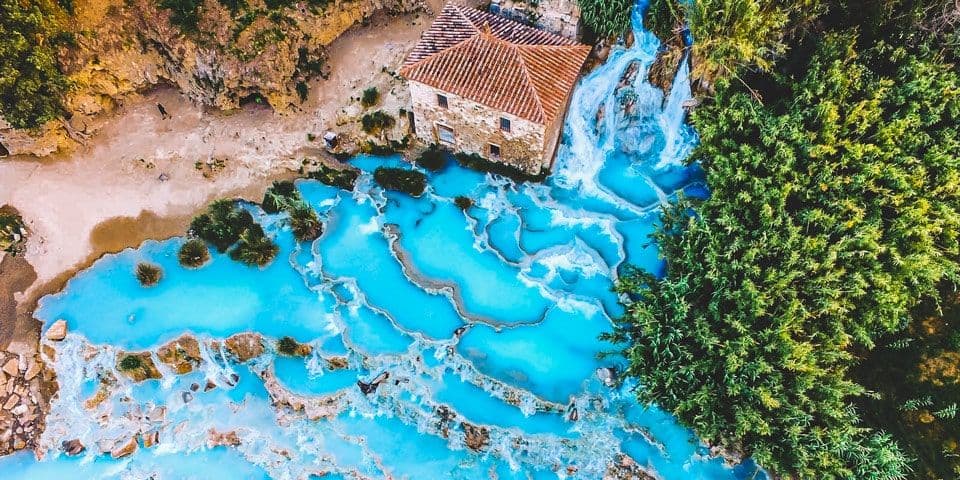
Saturnia — Tuscany’s Main “Wild” Thermal Baths
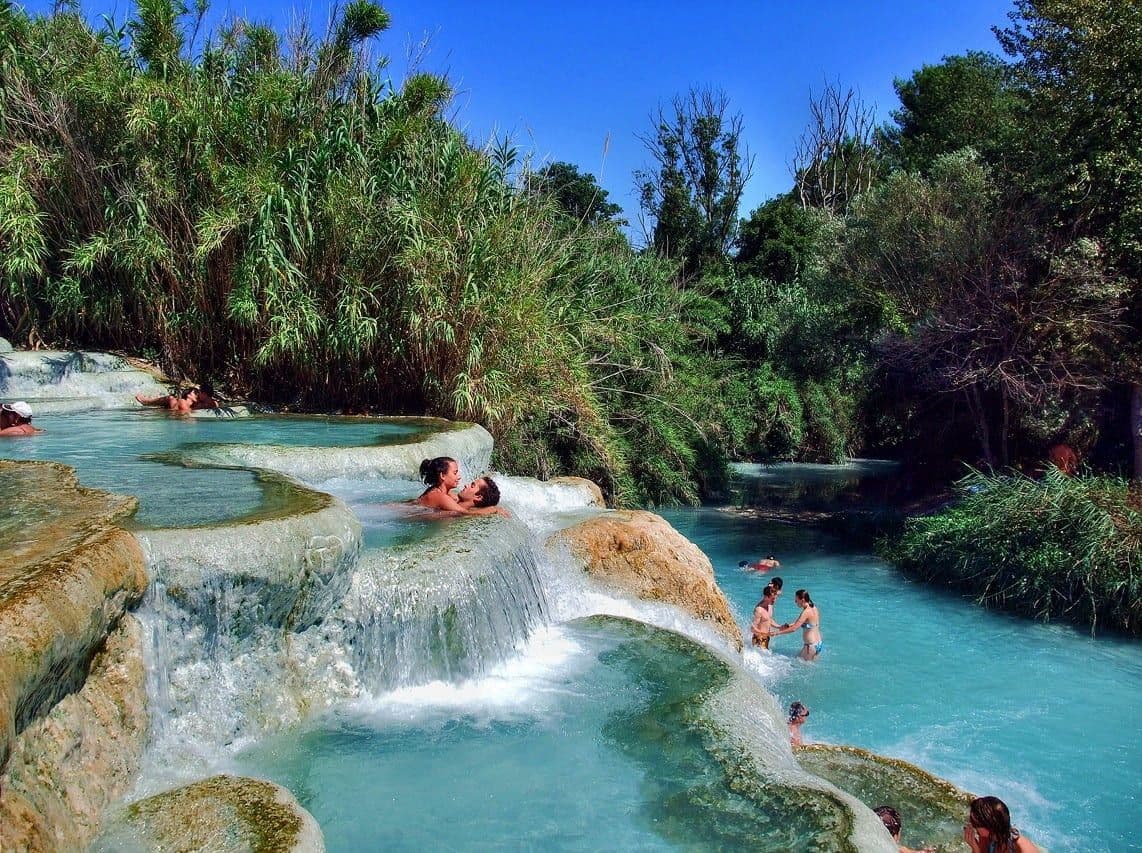
Cascate del Mulino in Tuscany is perhaps the most photogenic thermal spring in Italy: sulfur waterfalls with a temperature of around 37.5°C flow down natural travertine terraces. This is a classic example of terme libere — entry here is free 24/7, and nearby there is only paid parking.
Please note: small harmless red worms (larvae of non-biting midges) live at the bottom of the travertine pools, which are a sign of a completely clean biological ecosystem. However, tourists often panic when they see them in the water.
Nearby there is also the paid complex Terme di Saturnia Spa & Golf Resort with pools, a sauna, and a restaurant for those who want more comfort. Entrance to Parco Termale costs from several dozen euros per day and depends on the season and time of day; the complex operates from 9:30 to 19:00 (from April to October) and until 17:00 in winter, while parking on site is free. You can get here by car in approximately 2.5 hours from Rome or 3 hours from Florence. If you are planning a route through Tuscany, it is also worth exploring the region’s best wine routes — thermal relaxation combines perfectly with Chianti tastings.
Bagni San Filippo — A White Travertine Fairy Tale
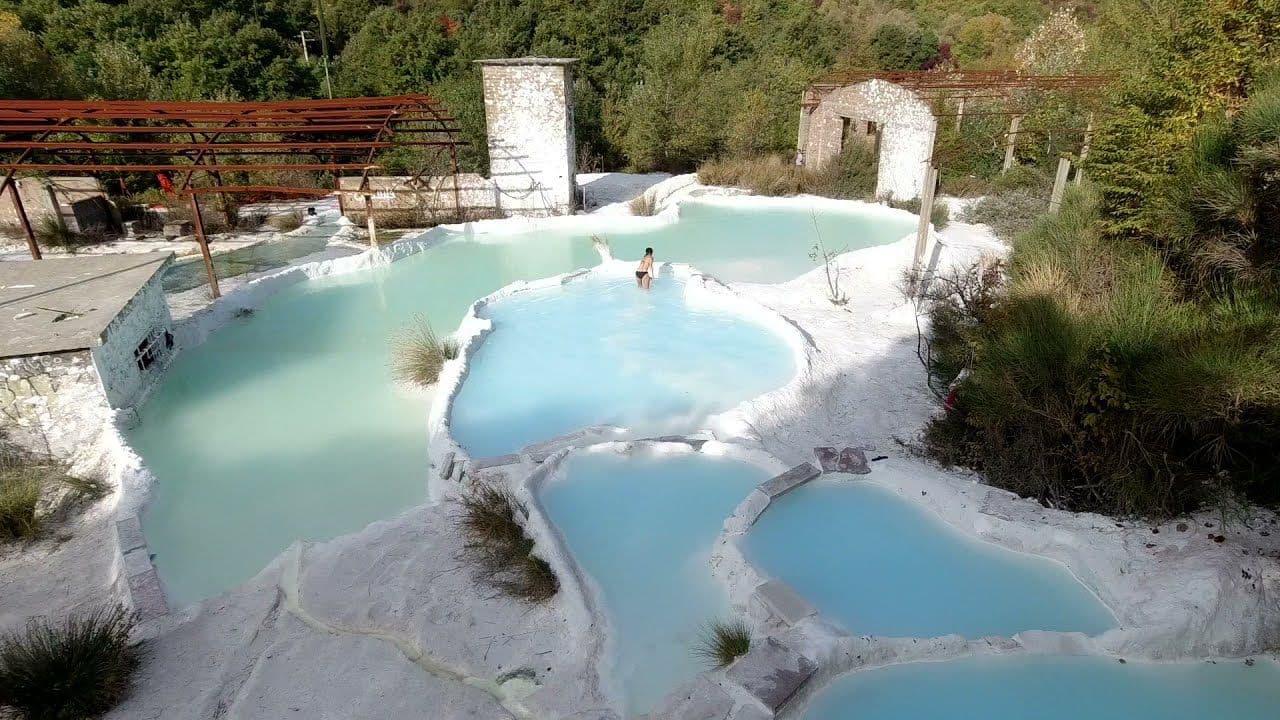
Another wild thermal bath in Tuscany, less famous than Saturnia but no less picturesque: limestone deposits create a snow-white “castle” of Fosso Bianco right in the forest. Entry is free, there is almost no infrastructure, so it is worth taking your own towel and water. Water flows from the spring at a temperature of up to 48°C, so swimming here is comfortable even in winter. The only expense is parking on Via Fosso Bianco (approximately €1.7 per hour or €10 for the whole day); there are no cafés or toilets nearby, so it is worth taking a snack and a supply of water with you.
Abano Terme — A Resort With a Two-Thousand-Year History
One of the oldest thermal towns in Italy, located 45 minutes by car from Verona or Venice. It is famous for mud therapy (fango termale) based on local clay, aged for several weeks in hot water. Most hotels in Abano are exactly Alberghi termali with their own pools, so entrance “from the street” is limited, and a day pass costs on average €35–60 depending on the season. Most spa hotels welcome guests daily approximately from 8:00 to 19:00, and on their own territory they have restaurants, pools, and mud therapy rooms, so in most cases there is no need to leave the hotel.
Sirmione and Lake Garda
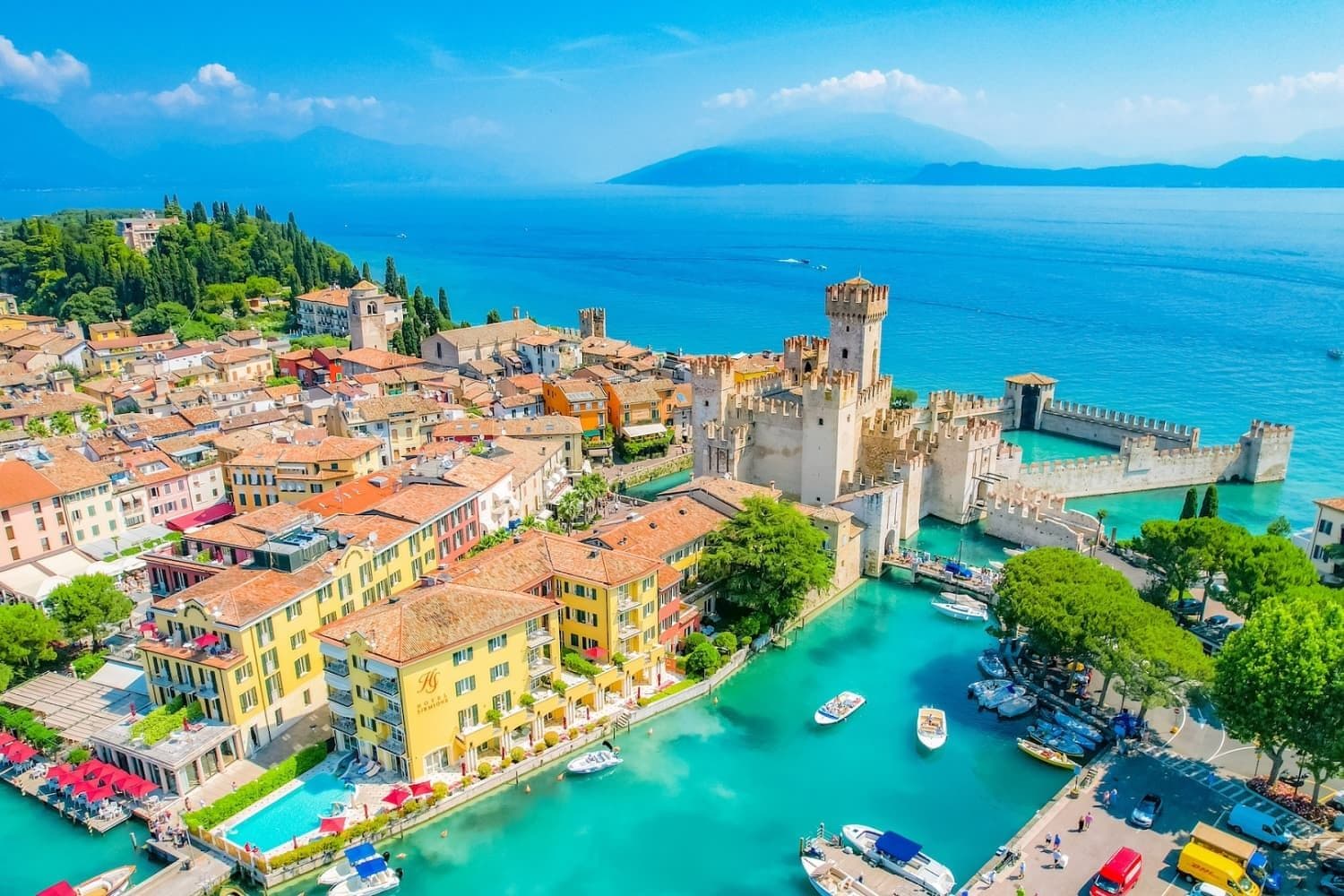
On the peninsula extending into Lake Garda, there is the Terme di Sirmione complex: sulfur water here comes directly from the bottom of the lake. The most budget-friendly way to experience the effect is Jamaica Beach, where thermal water reaches the shore naturally and swimming is free. The paid Aquaria Thermal Spa complex offers pools with views of the lake and the medieval Scaliger Castle. Five hours at Aquaria cost from €44, a full day — about €86, while the evening ticket is cheaper — from €34; the center is open from 9:00 to 22:00 (on Fridays and Saturdays — until midnight). You can get there on foot in 15 minutes from the center of Sirmione, by car (the “Sirmione” exit on the A4 highway), or by train to Desenzano or Peschiera del Garda with a further bus connection.
Bormio — Thermal Baths Among Alpine Peaks
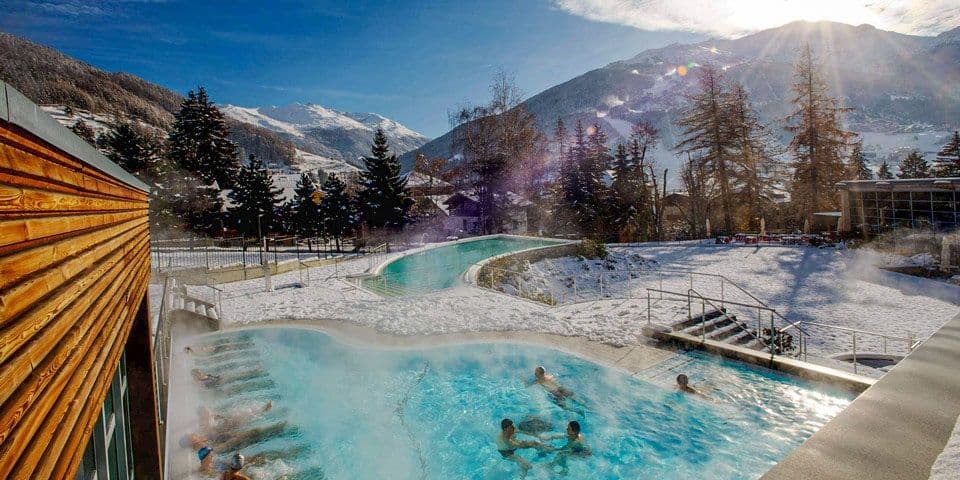
In the north of Lombardy, in Stelvio National Park, lies Bormio — a resort where thermal pools operate directly against the backdrop of snow-covered mountains. The Bagni Vecchi complex uses a grotto that, according to legend, was used by Roman legionnaires. In winter, the atmosphere here is especially unique: you can ski during the day and warm up in hot water in the evening — therefore, this is one of the top options for those looking for Italian thermal springs in winter. Entrance to Bagni Vecchi costs from €58 for 5 hours or from €72 without a time limit, and the complex operates daily approximately from 9:00 to 22:00. On the territory there is a restaurant with a panoramic view of the valley, a sauna overlooking Bormio, and its own hotel — everything is located just a few kilometers from the town center and ski lifts.
Ischia — A Volcanic Island of Thermal Baths
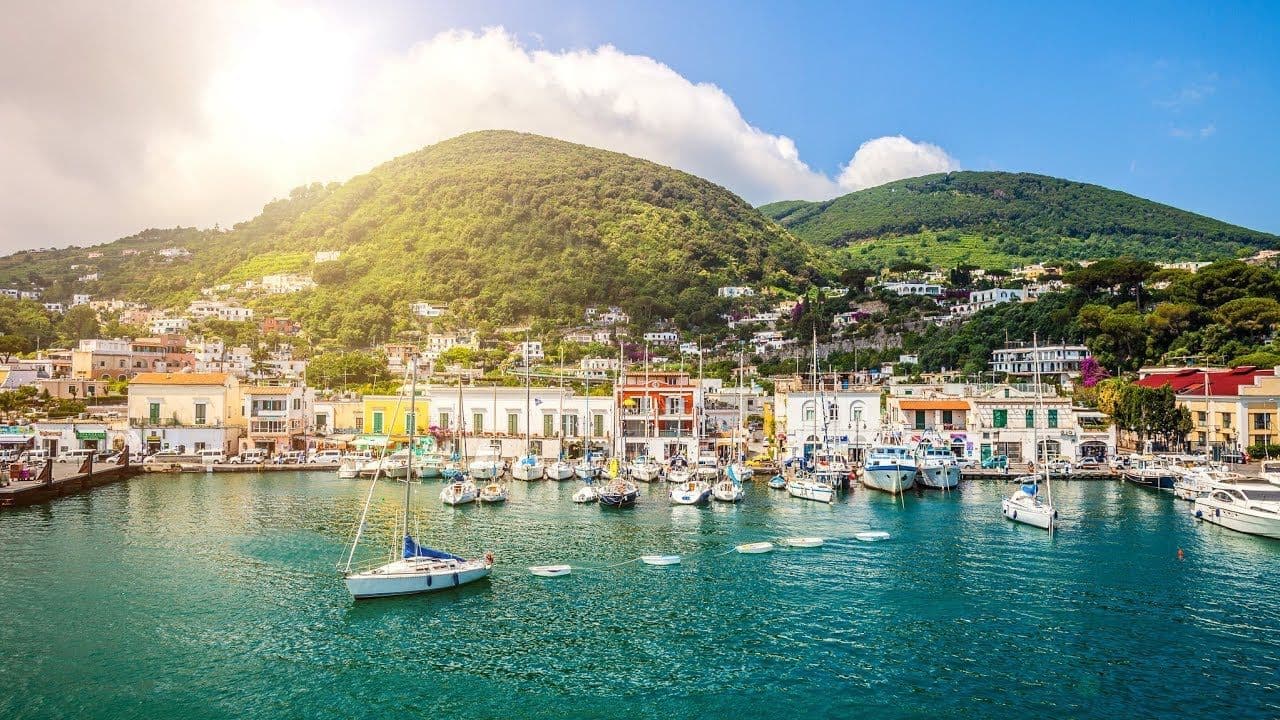
An island in the Gulf of Naples — one of the most powerful geothermal sources in Italy, where volcanic activity feeds dozens of natural and equipped pools. The most famous one is Negombo Park with a terrace of pools of different temperatures among a Mediterranean garden. There are also free options: Sorgeto Beach, where hot water seeps directly through the stones on the seashore — entrance is free, but you need to descend steep stairs. Be careful when stepping on stones in the water closer to the rocks — there is a risk of burns, as the temperature can reach 90°C.
The paid Negombo Park operates from mid-March to mid-October, from 8:30 to 19:00, and a full-day entrance ticket costs from €40 to €70 depending on the season. The territory includes a restaurant, a bar, and a four-star hotel; you can get there by public bus — from the port of Ischia to Negombo it is about 7 km.
Sicily: Sciacca and Segesta Thermal Baths
In the southwest of the island, Terme di Sciacca operates — a complex on the slope of Mount San Calogero with steam grottoes that were used even before the emergence of Ancient Rome. And not far from the ancient temple of Segesta are the less touristy Terme Segestane with a warm sulfur river among the rocks, where entry is free.
At the same time, entrance to Terme di Sciacca costs €13–18 depending on the day of the week, and the complex is known for its historic steam grottoes Stufe di San Calogero. Paid pools at Terme Segestane cost €15–18 for three hours (plus mud treatments from €25), they operate daily except Thursday; there is a restaurant on site, and the most convenient way to get there is by car via the A29 highway.

Near Rome: Terme dei Papi in Viterbo
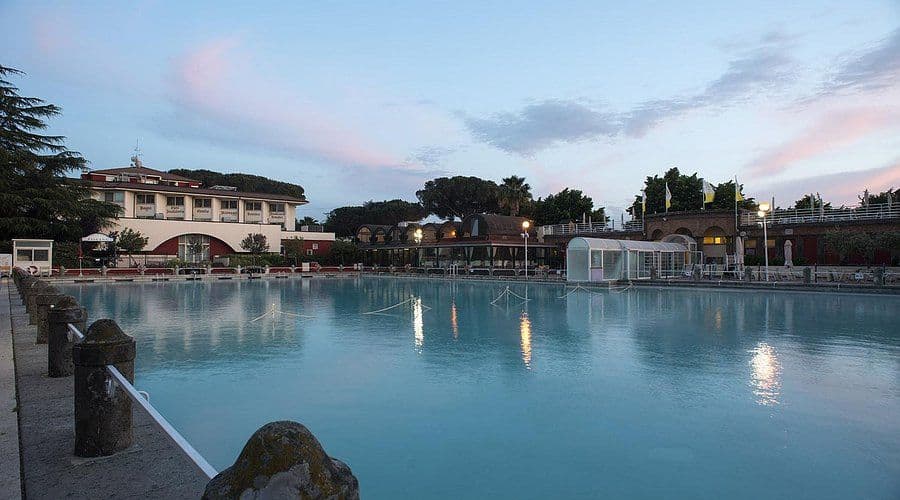
There are no natural thermal springs directly in Rome, but an hour’s drive north, in the city of Viterbo, there is the Terme dei Papi (“Pope’s Baths”) complex with a huge 32°C outdoor pool. Entrance to the monumental pool costs from €12 on weekdays and up to €18 on holidays; the complex is open daily from 9:00 to 19:00 (on Saturdays — until 1 a.m.), and Tuesday is a sanitary maintenance day. A direct bus leaves Rome every day from Piazza Flaminio (departure at 9:00, return at 16:00, a round-trip ticket costs about €12), and there is a restaurant and hotel operating on the territory of Terme dei Papi.Before or after the trip, it is worth exploring Rome itself: the city has many locations that do not appear on typical tourist routes — we wrote about this in our material about Rome’s secret places worth visiting.
Near Verona: Terme di Giunone
In the town of Caldiero, 15 minutes from Verona, there are Terme di Giunone — springs that, according to legend, were used by Roman nobility. The modern complex combines outdoor pools, mud therapy, and saunas right among the vineyards of Veneto. Unlike classic Alberghi termali, this is more like a thermal water park for families: the season lasts from May until the end of August, entrance costs from €12 to €20 depending on the day, and the complex is open from 9:30 to 19:30. The most convenient way to get there is by car — exit “Verona Est” on the A4 highway.
Milan and Thermal Relaxation Nearby
Milan itself is primarily about architecture, shopping, and the Duomo, rather than thermal resorts, so before or after relaxing in the waters, it is worth dedicating a day to the city.You can read about its architectural contrasts — from the Gothic cathedral to the Porta Nuova skyscrapers — in our article about Milan.The closest full-fledged thermal complexes to the city are the already mentioned Sirmione and Abano Terme, which are 1.5–2 hours away from Milan.
Life Hacks: Budget Thermal Springs of Italy
A trip to Italy’s thermal resorts does not necessarily have to involve high expenses if you know how to plan your holiday correctly. Thanks to a smart approach to choosing locations and visiting times, you can get maximum enjoyment from the healing properties of water while significantly saving your family budget.
-
Choose terme libere — Saturnia, Bagni San Filippo, Sorgeto on Ischia, and Terme Segestane in Sicily are free all year round; you will only have to pay for parking.
-
Look for the Ingresso serale (evening entrance) rate — in paid complexes such as Abano Terme or Sirmione, it is usually 30–40% cheaper than the daytime ticket.
-
Plan your visit on a weekday and during the first half of the day — on weekends, queues at popular complexes can last up to an hour.
-
Check opening hours in advance: large resorts operate without breaks, while smaller local thermal baths and hotel spas in the provinces often close for a siesta in the middle of the day.
-
The smell of sulfur is very persistent. It deeply penetrates the fabric of swimsuits and towels and cannot be removed by normal washing for several weeks. Do not take new or expensive branded swimsuits with you to wild springs — choose something you do not mind ruining. Also, be sure to remove silver jewelry: under the influence of sulfur, silver turns black instantly.
“Wild” thermal water does not depend on the season or weekends — it simply flows out of the ground. Therefore, the most budget-friendly way to see Italy’s thermal baths is to go where no one charges an entrance fee.
Where to Stay and Eat
Most large resorts — Abano Terme, Saturnia, Bormio, Ischia — are full-fledged thermal towns with hotels (Alberghi termali), where accommodation already includes access to their own pools, and there are always trattorias with local cuisine on-site or nearby. Near wild springs, infrastructure is usually more limited, so it is worth booking accommodation in the nearest town in advance — for example, in Manciano near Saturnia or in Castel del Piano near Bagni San Filippo. And while planning your route, it is useful to refresh a few phrases in Italian — 50 useful phrases that will come in handy during your trip will definitely be useful at the ticket office of a thermal complex or in a local trattoria.
Italian thermal springs are both free waterfalls among Tuscan hills and elegant spa hotels beneath Alpine peaks.
Choose a resort according to your budget and mood, and trust your comfortable journey to Italy to KLR Bus: regular routes Kyiv — Milan and to other Italian cities, convenient stops, and the opportunity to plan your route so that you have enough time both for thermal baths and sightseeing. Choose your destination and book your tickets today!